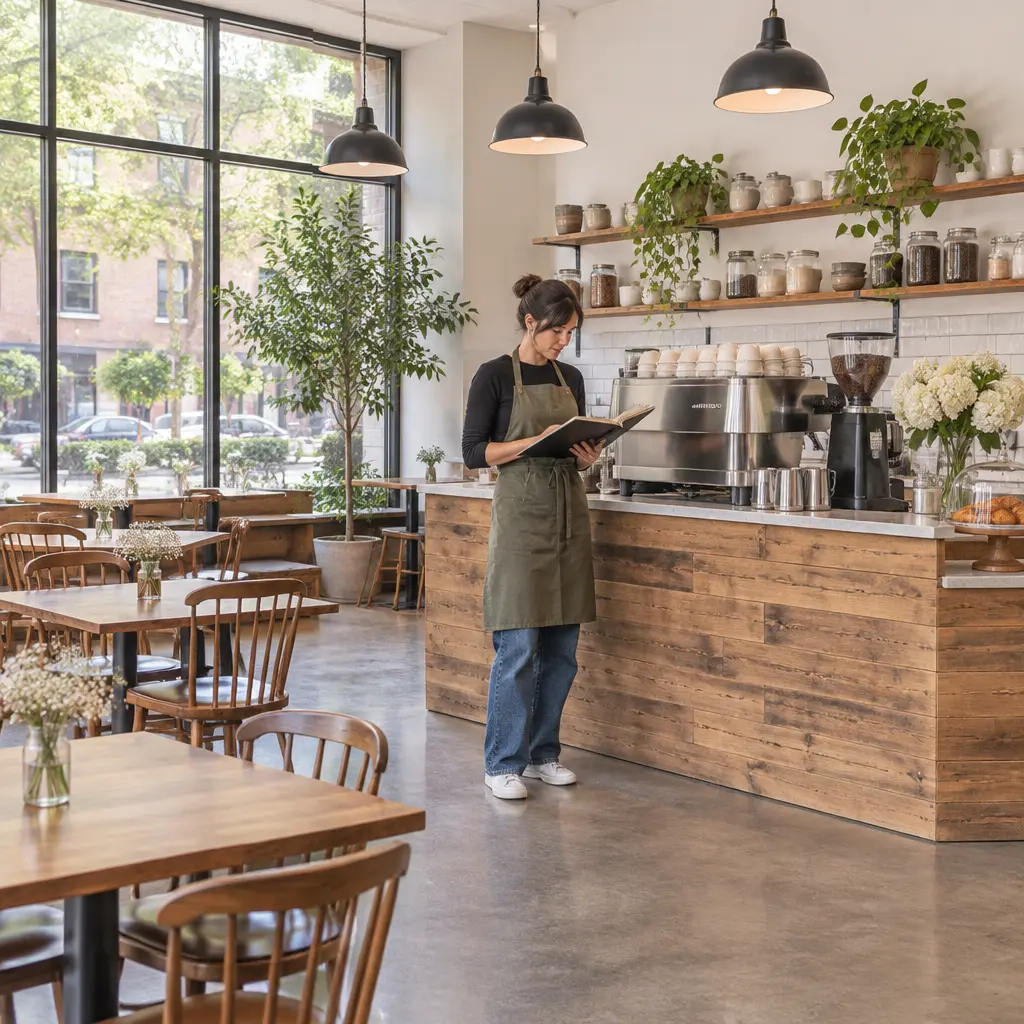
A café is a food-service business built around preparing and serving drinks and meals in a welcoming setting. The most common café mistakes are launching without tested demand, mismanaging costs and cash flow, delivering inconsistent service, overlooking food safety, and failing to build customer loyalty. Avoiding them takes more than good coffee: U.S. Bureau of Labor Statistics data show that accommodation and food services establishments experience substantial business turnover, while the National Restaurant Association reports that operators face persistent pressure from food, labor, and operating costs. The practical safeguards below connect market research, financial controls, operations, safety, and marketing to everyday café decisions.
Avoiding café business mistakes through disciplined planning
There is no single universally accepted definition of a “café business mistake.” In practical terms, it is a preventable decision or operating failure that weakens a café’s ability to attract customers, control costs, meet legal obligations, or earn enough to continue. The Small Business Administration recommends researching customers and competitors and estimating startup costs before opening; those steps help turn enthusiasm into evidence-based decisions.
Mistakes are connected rather than isolated. An untested concept can produce weak sales; weak sales make rent and payroll harder to cover; rushed cost-cutting can then harm service or food safety. Treat the following five risks as a system: validate demand first, build financial controls, standardize the customer experience, manage safety, and give customers a reason to return.
1. Opening without validating demand
Demand validation means checking whether enough people in a specific area want the café’s offer at prices that can support its costs. A busy street is not proof of a viable concept: foot traffic may consist of commuters who do not stop, and nearby cafés may already satisfy local preferences.
Before signing a lease, identify likely customer groups, observe foot traffic at different times and days, compare nearby competitors, and test a limited menu through pop-ups, catering, or a temporary stall. Ask potential customers about purchase habits, but give more weight to observed behavior and paid trials than to compliments. The SBA’s market-research guidance recommends examining demand, market size, location, market saturation, and competing prices.
A useful test is to estimate how many transactions the café needs per day and compare that figure with realistic local demand. For example, a specialty coffee concept near offices may depend on fast weekday service, while a neighborhood café may need weekend dining and repeat visits. A concept that works in one setting may not transfer to another.
2. Mispricing the menu and underestimating costs
Cost and pricing mistakes occur when owners set prices by copying competitors or relying on ingredient cost alone. A sustainable menu price must also help cover labor, rent, utilities, packaging, payment fees, waste, taxes, and other overhead. The National Restaurant Association’s annual industry reporting highlights continuing pressure from food and labor expenses, making regular cost review important rather than optional.
Build a cost sheet for each menu item. Record recipe quantities, ingredient purchase prices, serving yields, and packaging. Then compare the item’s contribution—the money left after direct costs—with the labor and operating capacity it consumes. Review supplier invoices and portion sizes regularly, since small changes in coffee, dairy, produce, or packaging prices can erode margins over time.
Avoid treating revenue as profit. Create a monthly cash-flow forecast that includes slow periods, startup expenses, equipment repairs, taxes, debt payments, and payroll. The SBA advises businesses to calculate startup costs and estimate when they may become profitable. Maintain a contingency reserve where possible, and test whether the business can withstand lower-than-expected sales before committing to long-term expenses.
3. Letting service and product quality vary
Inconsistent operations arise when recipes, service expectations, and staff responsibilities exist only in the owner’s head. Customers may receive different drinks from different baristas, while employees may be unsure how to handle queues, substitutions, complaints, or equipment problems.
Create concise, usable operating procedures for recipes, opening and closing, cleaning, stock rotation, order handoff, and customer recovery. Train staff through demonstration and practice, not just a document or one-time briefing. Standard recipes should specify quantities, preparation steps, cup sizes, and acceptable substitutions; check them periodically during service.
Track a small set of service measures, such as order accuracy, ticket time during peak periods, customer feedback, and remake or waste rates. These measures help identify where a process is failing without blaming staff for problems caused by poor equipment, unrealistic staffing, or confusing procedures. The goal is reliable hospitality, not speed at any cost.
4. Neglecting food safety and compliance
Food-safety failures include unsafe holding temperatures, inadequate handwashing, allergen cross-contact, poor cleaning, and incomplete records. They can harm customers and damage a business’s reputation, so safety needs to be built into routine work rather than treated as paperwork for inspections.
The U.S. Food and Drug Administration’s Food Code provides a model for retail food-safety regulation, but local and state authorities adopt and enforce their own requirements. Before opening, confirm applicable permits, inspection rules, employee training requirements, and building or fire approvals with the relevant local agencies. Assign responsibility for temperature checks, cleaning schedules, receiving, date labels, and corrective action.
Train staff to communicate ingredient and allergen information accurately, prevent cross-contact, and escalate questions they cannot answer. Keep required records accessible and make safety checks part of shift handovers. A written procedure is useful only if employees have the equipment, time, and training to follow it.
5. Failing to retain customers and measure marketing
A café can attract first-time visitors and still struggle if it gives them no reason to return. Treating social-media activity or opening-week crowds as proof of lasting demand is a common marketing error. Sustainable growth depends on understanding who comes back, what they buy, and which outreach produces visits rather than impressions alone.
Define a clear promise—such as dependable specialty coffee, a strong breakfast offer, local ingredients, or a comfortable place to work—and make the menu and service support it. Keep business listings accurate, communicate hours and menu changes clearly, and ask customers for feedback. A simple loyalty program can encourage repeat visits, but its rewards should be affordable and easy to understand.
Review sales by daypart, menu item, and promotion. Compare the cost of a campaign with measurable outcomes such as redeemed offers, new-customer visits, or repeat purchases. The National Restaurant Association’s industry research documents the scale and changing conditions of the restaurant sector; for an individual café, point-of-sale data and customer feedback provide the more immediate evidence needed to adjust its offer.
A practical checklist for preventing café mistakes
Use this short review before opening and revisit it as the business changes:
- Validate local demand and test the offer before committing to major fixed costs.
- Calculate recipe costs, realistic sales targets, startup needs, and monthly cash flow.
- Document recipes and operating procedures, then train and coach staff consistently.
- Confirm local permits and food-safety rules; assign clear responsibility for daily checks.
- Measure repeat visits and promotion results, and adjust using sales and customer feedback.
Conclusion
The most damaging café mistakes often begin with assumptions: assuming a location guarantees customers, a popular drink guarantees profit, or good intentions guarantee consistent service and safe food. Market validation, careful pricing and cash-flow planning, repeatable operations, food-safety compliance, and customer retention address those risks together. Use the checklist to review your plan, consult local regulators before opening, and update your decisions with real sales and cost data. A café is more likely to thrive when its hospitality is matched by disciplined business management.
Sources: U.S. Small Business Administration, Market research and competitive analysis, https://www.sba.gov/business-guide/plan-your-business/market-research-competitive-analysis; U.S. Small Business Administration, Calculate your startup costs, https://www.sba.gov/business-guide/plan-your-business/calculate-your-startup-costs; U.S. Food and Drug Administration, Food Code, https://www.fda.gov/food/retail-food-protection/fda-food-code; National Restaurant Association, Research and Reports, https://restaurant.org/research-and-media/research/; U.S. Bureau of Labor Statistics, Business Employment Dynamics, https://www.bls.gov/bdm/