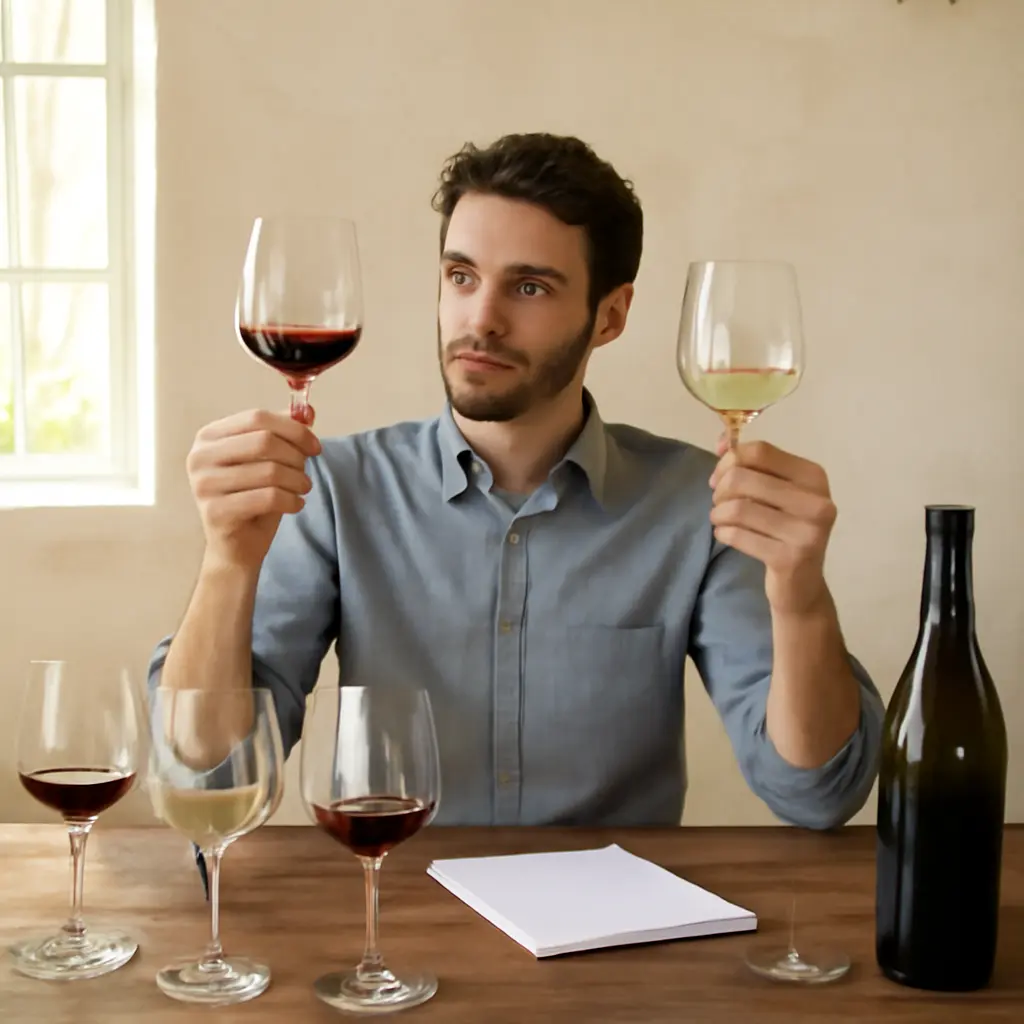
Wine tasting notes are descriptions of a wine’s aromas, flavors, texture, and finish. They can sound like flowery jargon, but most terms are shorthand for things a taster can notice and compare: “citrus” points to a family of aromas, “high acidity” describes a mouthwatering sensation, and “long finish” refers to how long flavors linger after swallowing. Learning this vocabulary makes notes easier to understand—not because every phrase is precise or universally agreed upon, but because it gives people a shared way to describe what they experience. The key is to translate the language into sensory evidence, recognize where interpretation enters, and treat tasting notes as useful guides rather than objective verdicts.
Tasting-note language explains wine’s sensory attributes
A tasting note is a structured account of sensory observations about a wine. The Court of Master Sommeliers describes systematic tasting through appearance, nose, and palate, moving from observable characteristics toward conclusions such as grape variety, region, or quality. In practical terms, a note may record color, aromas, sweetness, acidity, tannin, body, flavor, and finish.
These descriptions are not a laboratory readout. Aroma and flavor are closely connected to smell, and perception is affected by a taster’s experience, expectations, and vocabulary. A note that says “green apple” does not mean the wine contains pieces of apple; it identifies an aroma or flavor that resembles one. The language is most useful when it distinguishes what was sensed from what the taster inferred.
Aroma and flavor terms describe sensory associations
Aroma refers to what a person smells, especially before tasting, while flavor combines taste and smell as wine is held in the mouth. Common aroma families include fruit, flowers, herbs, spices, earth, and oak-related notes such as vanilla or toast. For example, “black cherry” is a fruit-family descriptor; “peppery” suggests a spice association; and “earthy” can describe impressions reminiscent of soil, mushrooms, or forest floor.
The Wine & Spirit Education Trust (WSET) uses a systematic approach to tasting that encourages tasters to assess characteristics in an orderly way. That structure helps keep a note from becoming a string of attractive but disconnected words. It also allows readers to compare wines: a note identifying citrus and floral aromas communicates a different profile from one emphasizing dark fruit, smoke, and spice.
Structure terms describe sensations, not just tastes
Acidity, tannin, body, sweetness, and alcohol describe aspects of a wine’s structure. Acidity often creates a fresh, mouthwatering sensation. Tannin can feel drying or grippy, particularly in red wines. Body describes perceived weight in the mouth, while sweetness ranges from dry to sweet. These terms are related but distinct: a wine can be full-bodied and dry, or light-bodied and sweet.
“Finish” means the flavor and sensation that remain after swallowing or spitting. A short finish fades quickly; a persistent finish lasts longer. The term does not automatically mean that a wine is good, but it can be one factor in a broader assessment. Separating these attributes helps explain why “bold,” “smooth,” or “balanced” alone may be too vague to tell a reader much.
Descriptors are useful, but perception varies
People do not always identify the same aroma in the same wine. Familiarity with a reference—such as blackcurrant, clove, or wet stone—can influence how readily someone recognizes or names it. Tasting conditions, including temperature, glassware, food, and the order in which wines are sampled, can also affect perception. A descriptor is therefore best understood as a comparison, not proof that every drinker will detect precisely the same thing.
This subjectivity does not make tasting notes pointless. It makes clear wording more important. “Bright acidity with lemon-like aromas” gives readers more to work with than “exciting,” while a note that marks an inference—“possibly oak-aged, given the vanilla and toast impressions”—is more transparent than presenting a guess as fact.
Wine vocabulary makes tasting notes easier to interpret
The vocabulary of wine tasting includes both sensory descriptors and evaluative language. Sensory terms report impressions, while evaluative terms judge them. “Raspberry aroma” is a sensory description; “elegant” is an assessment. Recognizing that difference helps readers understand why one phrase can be comparatively concrete and another open to interpretation.
Fruit, floral, herbal, and earthy descriptors
Fruit descriptors are often grouped by type and ripeness. A taster might describe red-fruit impressions such as cherry or strawberry, or darker-fruit impressions such as blackberry or plum. Citrus, apple, and pear are common in white-wine descriptions. Floral, herbal, and earthy terms add further dimensions, but they remain analogies: “violet” signals a floral impression, not an ingredient added to the wine.
These categories can help readers form expectations, but they should not be treated as a fixed code. The same wine may prompt different comparisons from different tasters, and a descriptor may reflect aroma, flavor, or both. A practical reader can ask, “What family of sensation is this word pointing to?” instead of assuming the note describes a literal component.
Oak, age, and winemaking language
Terms such as vanilla, toast, smoke, and baking spice may be used to describe impressions associated with oak maturation. Other notes may suggest development over time, including dried fruit, leather, or nut-like aromas. Such language can hint at winemaking choices or a wine’s evolution, but a tasting note alone cannot confirm the production method or the wine’s age.
For instance, “vanilla” can be a sensory clue that a taster associates with oak, but it is not a complete account of how the wine was made. Reliable interpretation comes from combining the note with producer information, the wine’s technical details, and direct tasting rather than treating one descriptor as conclusive evidence.
Balance, complexity, and other judgments
“Balanced” generally means that the wine’s components—such as acidity, sweetness, alcohol, fruit, and tannin—seem harmonious to the taster. “Complex” suggests multiple layers or changing impressions. “Elegant,” “powerful,” and “approachable” are also judgments, not measurements with a single universal scale.
These words become more informative when supported by specifics. Instead of writing only “well balanced,” a taster might explain that lively acidity offsets ripe fruit and moderate sweetness. That additional detail lets readers see what the judgment is based on and decide whether they share the preference.
Systematic tasting turns descriptions into a practical method
A methodical tasting sequence gives tasting vocabulary a job: first record observations, then interpret them, and only then evaluate the wine. WSET and the Court of Master Sommeliers both teach structured approaches, though their frameworks and purposes differ. These methods are used in education and professional tasting; casual drinkers can adapt the same sequence without trying to identify every grape or region.
Observe, smell, taste, and record
Start with appearance, noting color and intensity. Smell the wine and identify a few clear aroma families rather than reaching for an elaborate list. Then taste for sweetness, acidity, tannin, body, alcohol impression, flavor, and finish. Recording observations in the same order makes it easier to compare bottles and notice personal preferences over time.
- Describe one or two aromas using familiar references.
- Record the main structural sensations, such as acidity, tannin, sweetness, and body.
- Note whether flavors persist after swallowing.
- Separate direct observations from guesses about grape, place, or production.
A simple example might read: “Pale straw color; lemon and green-apple aromas; dry, with lively acidity and a light body; citrus flavor, with a short, clean finish.” It is more useful than a paragraph full of impressive-sounding adjectives because each phrase tells the reader what was noticed.
Use comparison to make unfamiliar terms concrete
Comparing two wines side by side can clarify terms that are hard to understand in isolation. One may feel more acidic, fuller-bodied, or more tannic than the other. The comparison supplies a reference point, making relative differences easier to notice than abstract definitions alone.
A useful practice is to taste a small set of wines with one contrast in mind—for example, a crisp white beside a richer, oak-influenced white. Focus on the sensations that differ, then check whether the note’s language matches what you experienced. This turns vocabulary into a tool for attention rather than a test of expertise.
Clear tasting notes help consumers make better choices
Tasting notes matter because they help people decide what to try, explain what they enjoy, and communicate with wine sellers or dining staff. Their value depends on clarity and fit: a note should help a reader anticipate a style, not imply that there is one correct response to a bottle.
Translate jargon into questions a reader can answer
When a note feels pretentious, translate its terms into ordinary questions. “High acidity” becomes: Does the wine make your mouth water? “Tannic” becomes: Does it leave a drying or gripping feeling? “Long finish” becomes: Do the flavors linger? “Complex” becomes: Do you notice several distinct aromas or changes as you taste?
This translation does not require specialist training. It simply connects vocabulary to observable sensations. Readers can also use notes as preference filters: someone who likes fresh, citrus-led wines may look for those descriptors, while someone who prefers richer textures may pay closer attention to body and oak-related terms.
A real-world note should inform, not intimidate
In a restaurant or shop, concise notes can help match a wine to a person’s taste or a meal. A useful recommendation might say that a wine is dry, bright, and citrusy, with a light body—then connect those features to the customer’s stated preferences. This is more actionable than relying on prestige language alone.
Tasting notes are also shaped by their purpose. A critic may emphasize quality and style; a producer may highlight a wine’s intended character; a consumer may simply record whether they would buy it again. Readers should consider who wrote the note and what it is meant to do, just as they would with any product description.
Conclusion: understand the language, then trust your senses
Tasting notes sound pretentious when sensory shorthand is mistaken for a secret code—or when elaborate judgments are presented without explanation. Aroma and flavor descriptors point to familiar comparisons; structural terms describe sensations such as acidity, tannin, and body; and evaluative words such as “balanced” express a taster’s judgment. A systematic approach helps distinguish observation from inference and preference.
The broader lesson is that wine vocabulary can make conversation and choice more precise without making tasting less personal. Start with a few simple descriptors, compare wines, and notice which words match your own experience. For further study, consult the WSET’s systematic approach to tasting or the Court of Master Sommeliers’ tasting framework, then use them as guides—not rules—for describing what is in your glass.
Sources: Wine & Spirit Education Trust, Systematic Approach to Tasting (SAT), https://www.wsetglobal.com/knowledge-centre/wset-systematic-approach-to-tasting-sat/; Court of Master Sommeliers, Deductive Tasting Method, https://www.mastersommeliers.org/