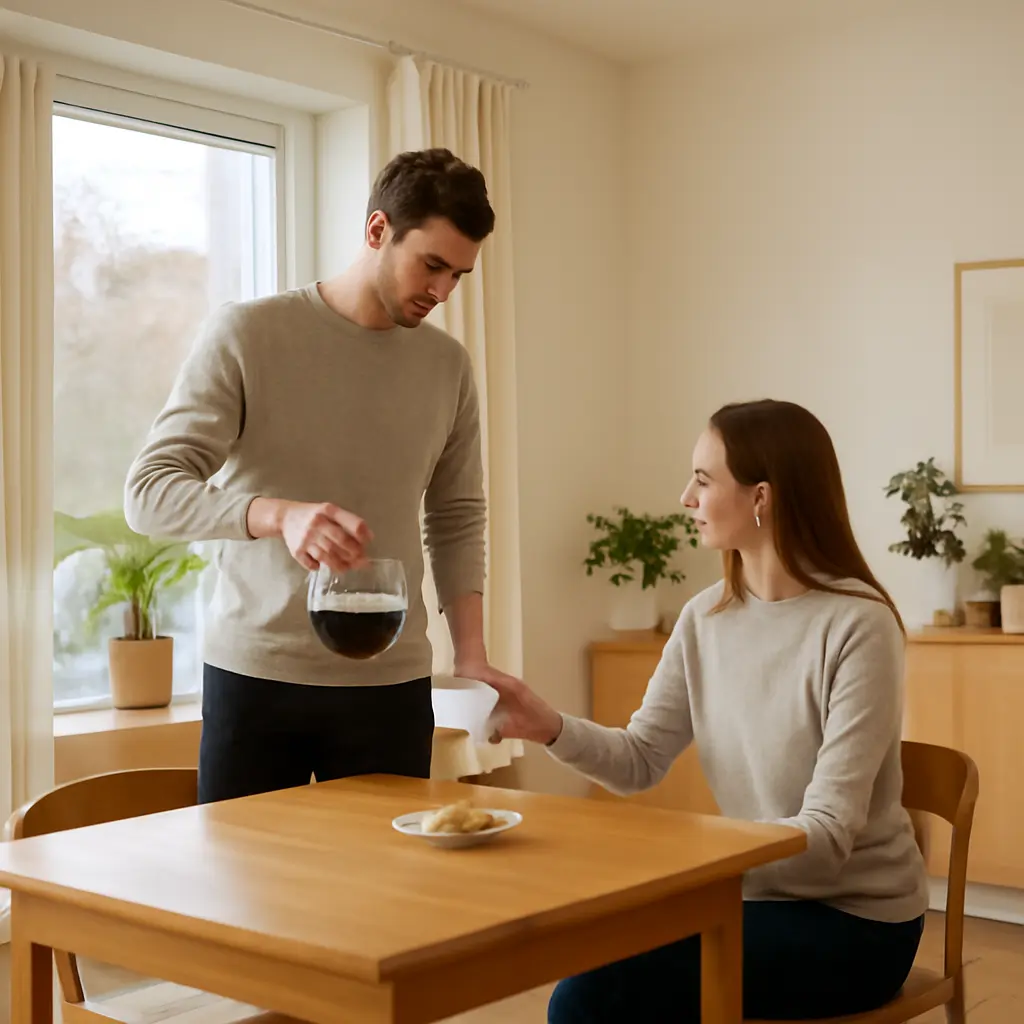
Hygge is a Danish approach to comfort, togetherness, and well-being—not simply a synonym for a soft blanket or a candlelit room. Coffee became one of its everyday rituals: a reason to pause, share conversation, and make ordinary time feel welcoming. That connection matters across Scandinavia, where coffee consumption is among the world’s highest: the International Coffee Organization’s country data has repeatedly placed Finland, Sweden, and Denmark near the top in per-person consumption. Yet hygge is neither a formal coffee method nor a single national custom. Its meaning becomes clearer through its Danish roots, the region’s coffee habits, the social settings where coffee is shared, and the limits of treating a complex culture as a lifestyle trend.
Hygge defines coffee as a social ritual
Hygge is a Danish cultural concept associated with creating a sense of coziness, ease, and conviviality. The official tourism organization VisitDenmark describes it as an atmosphere of intimacy and comfort, often made through simple shared pleasures rather than luxury. Coffee fits naturally into that idea because it can mark a pause, welcome a guest, or give friends and colleagues a reason to gather. In this sense, hygge is not a recipe for brewing coffee; it is a way of framing the experience around it.
Coffee breaks turn routine into togetherness
A hygge coffee break is an informal occasion to slow down and be present with other people. In Denmark, the word “kaffehygge” combines coffee with hygge, describing an everyday gathering that might include cake, conversation, and a warm drink. Its defining features are social rather than technical: unhurried time, a comfortable setting, and the sense that guests are welcome. A cup can be carefully brewed or simply made at home; the atmosphere matters more than equipment or prestige.
The practice also sits within a wider Nordic pattern of coffee breaks. Sweden’s “fika,” for example, commonly means taking a coffee break with something to eat and, often, other people. The terms are related in spirit but not interchangeable: fika is a distinct Swedish custom, while hygge is a broader Danish concept that can involve many activities besides coffee.
Everyday comfort is not the same as a coffee style
Hygge does not specify roast, origin, brewing equipment, or serving temperature. Those choices belong to coffee preparation, whereas hygge describes the mood and social meaning surrounding an occasion. Filter coffee is common in Nordic homes, but espresso, café coffee, or decaffeinated coffee can also accompany a hyggelig gathering. This distinction helps avoid a common misconception: there is no single “hygge coffee” with an official formula.
Scandinavian coffee habits give hygge a daily setting
Coffee’s close association with hygge reflects a long-standing place for the drink in Nordic daily life. The International Coffee Organization’s per-capita consumption comparisons have consistently shown exceptionally high coffee use in Finland and substantial consumption in Sweden and Denmark. Exact rankings and figures vary by year and measurement method, so the broad conclusion is more reliable than any single league-table number: coffee is a frequent part of life in the region.
Home coffee and hospitality
At home, serving coffee is a familiar form of hospitality. A host may offer a pot alongside pastries or cake, making the visit feel generous without requiring an elaborate meal. This can turn a short visit into a comfortable pause and gives people a shared focus while they talk. The ritual is flexible: it may happen after dinner, during a weekend visit, or on a quiet afternoon.
The practical point is that hygge depends less on buying special objects than on how people use ordinary ones. A warm drink, a table, and time for company can be enough. Candles and soft lighting are recognizable associations, but they are not requirements—and they do not replace the human connection at the heart of the concept.
Workplace breaks and the Swedish fika comparison
Coffee breaks can also structure working life. Swedish fika is the clearest regional comparison: workplaces and social groups may pause for coffee and conversation, and the break can be as important for connection as for refreshment. Danish coffee gatherings may overlap with this everyday sociability, but hygge itself is broader and can describe a quiet evening, a meal, or time spent at home. Keeping the distinction clear respects the local meanings rather than flattening Nordic cultures into one practice.
Hygge coffee balances sensory comfort with moderation
The coffee associated with hygge is often appreciated through sensory details: warmth in the hands, aroma in the room, and the taste of a familiar brew. These details can help make a pause feel deliberate. But hygge is not a health claim, and coffee’s effects depend on the person, the amount consumed, and how it is prepared. The U.S. Food and Drug Administration says that up to 400 milligrams of caffeine a day is not generally associated with negative effects for most adults, while emphasizing that sensitivity varies and pregnancy or certain health conditions may call for different limits.
A mindful pause, not a caffeine prescription
A coffee ritual can encourage a person to take a break, but the benefits should not be overstated. Coffee is not necessary for hygge: tea, cocoa, or a non-caffeinated drink can serve the same social purpose. Anyone sensitive to caffeine can choose decaf or enjoy a gathering without a hot drink. The defining feature remains the quality of attention and company, not the stimulant.
A simple gathering is the real-world example
Imagine a friend dropping by on a rainy afternoon. The host makes coffee, sets out a small cake, and leaves phones aside while they talk. This ordinary scene illustrates how coffee can support hygge without requiring a designed interior, expensive beans, or a prescribed routine. The same principle can be adapted to a workplace break or a family visit: make space for people to feel at ease and give the moment enough time to unfold.
Hygge’s global popularity can obscure its cultural roots
Hygge gained international visibility through books, travel writing, and lifestyle coverage, where it is sometimes reduced to candles, knitwear, and attractive interiors. Those images can be inviting, but they risk turning a lived cultural idea into a shopping list. VisitDenmark’s account places emphasis on atmosphere, comfort, and being together—qualities that cannot be purchased as a package.
The same caution applies to the claim that hygge “changed Scandinavia.” Coffee and social breaks have deep roots in Nordic societies, and hygge is a Danish term, not a single Scandinavian institution that transformed the region. A more accurate interpretation is that hygge offers a useful lens for understanding how everyday rituals—coffee included—can support hospitality and belonging. Its wider appeal reflects interest in slowing down and making ordinary life feel more connected, rather than evidence of one uniform Scandinavian coffee culture.
Conclusion: hygge makes coffee meaningful through company
Hygge is a Danish concept of comfort and conviviality, while coffee is one familiar way to give that feeling a daily form. Scandinavian consumption patterns help explain why the pairing is so visible, and practices such as Swedish fika show how coffee breaks can carry social meaning across the region without making the traditions identical. The central lesson is simple: hygge is not a special roast or a shopping trend but an approach to creating relaxed, welcoming time with others. To explore it, start with a modest coffee break—or another drink—and give the people around you your attention.
Sources: VisitDenmark, “The Danish concept of hygge,” https://www.visitdenmark.com/denmark/things-do/danish-culture/hygge; International Coffee Organization, “Coffee Consumption,” https://ico.org/what-we-do/world-coffee-statistics-database/; Swedish Institute, “Fika,” https://sweden.se/culture/food/fika; U.S. Food and Drug Administration, “Spilling the Beans: How Much Caffeine is Too Much?,” https://www.fda.gov/consumers/consumer-updates/spilling-beans-how-much-caffeine-too-much