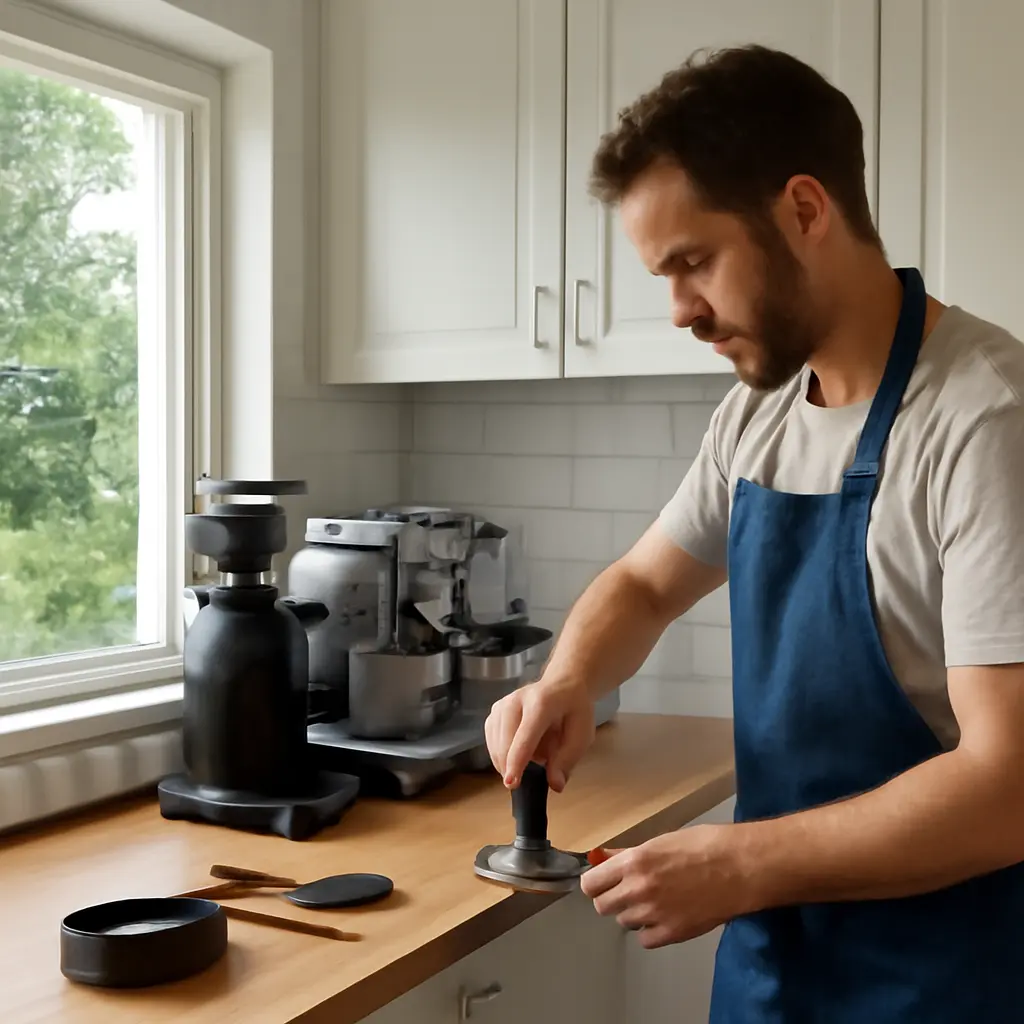
Tamping is the step of compressing ground coffee into an even bed inside an espresso basket before brewing. Done consistently, it helps create a level surface for water to pass through; done carelessly, it can contribute to uneven extraction and turn a satisfying coffee ritual into a frustrating cycle of sour, bitter, or inconsistent shots. But tamping is rarely the whole story: grind size, dose, distribution, basket choice, and machine settings matter too. Coffee research and professional guidance point to a practical lesson—aim for a level, repeatable tamp, not maximum force.
Tamping Technique and Espresso Puck Preparation
Espresso puck preparation is the process of dosing, distributing, and compressing coffee grounds in a portafilter basket to create a consistent bed for brewing. The Specialty Coffee Association’s espresso standards describe espresso through measurable brewing parameters, including beverage mass, time, and pressure; they do not prescribe one universal tamping force. That distinction matters: tamping is one part of a connected preparation routine, rather than a standalone guarantee of a good shot.
A tamp can help settle and level the grounds, but tamping harder does not reliably fix a poorly distributed dose. Research by espresso scientist and author Scott Rao, along with practical guidance from barista educators, emphasizes repeatability and evenness. Channeling—when water finds easier routes through the coffee bed—can result from uneven preparation, although grind, dose, basket geometry, and machine performance can also contribute.
Level tamping and consistent compression
A level tamp compresses the coffee bed without leaving one side noticeably higher than the other. If the tamper tilts, the puck may be denser on one side, potentially encouraging uneven water flow. In daily use, a comfortable, repeatable press that removes visible air gaps and leaves a flat surface is more useful than trying to hit a particular force number.
There is no broadly accepted rule that every espresso requires exactly 30 pounds of tamping pressure. Once the grounds have been compressed into a stable puck, extra force generally does not compensate for an unsuitable grind or uneven distribution. Focus on keeping the tamper straight, using the same motion, and avoiding a second, angled tamp.
Distribution before tamping
Distribution means spreading coffee grounds evenly throughout the basket before compression. Clumps and empty spaces can create differences in resistance across the puck. A simple routine—breaking up clumps, distributing grounds to the edges, and leveling the surface—can make tamping more consistent. Some baristas use a thin-needle tool, often called a Weiss Distribution Technique tool; others use careful tapping or a distribution tool designed for their basket.
Distribution tools are not automatically better in every setup. The useful test is whether the method produces repeatable shots with fewer visible signs of uneven flow. Keep the dose and grind setting steady while comparing methods, rather than changing several variables at once.
Espresso Extraction and the Signs of a Poor Tamp
Espresso extraction is the transfer of soluble compounds from ground coffee into brewing water under pressure. A puck with uneven resistance may allow water to flow faster through some areas than others. The result can be an unbalanced cup, but taste alone cannot identify tamping as the cause: a shot that tastes sour or bitter may also reflect grind size, roast, water temperature, dose, or brew ratio.
Channeling, spurting, and uneven flow
Channeling occurs when water preferentially flows through pathways in the coffee bed instead of contacting the grounds evenly. A visibly tilted puck, inconsistent distribution, or damaged basket may increase the risk, but a fast or messy shot is not proof of a tamping mistake. Bottomless portafilter spray can be a clue to uneven flow, though it can also reflect grind and dose problems.
A useful diagnostic is to observe several shots made with the same dose, grind, and recipe. If the flow varies substantially despite stable settings, review puck preparation and equipment cleanliness. If shots are consistently too fast or too slow, adjust grind size before assuming that tamping pressure is the problem.
Taste and shot consistency
A sour, thin shot can indicate under-extraction, while harsh bitterness may be associated with over-extraction or an unbalanced brew. These are clues, not definitive diagnoses. The Specialty Coffee Association’s brewing research and professional espresso practice both support evaluating a recipe through controlled variables rather than relying on one symptom.
For a practical home test, keep the coffee dose constant, weigh the beverage yield, and record the time. If a shot changes after you improve distribution and level the tamp, preparation may have been part of the issue. If it does not, investigate grind, freshness, water, and machine temperature next.
A Repeatable Espresso Tamping Routine
A repeatable routine makes it easier to identify what is actually affecting a shot. The following sequence keeps tamping in context with the preparation steps around it.
- Use a consistent dose appropriate for the basket and weigh it when possible.
- Break up clumps and distribute grounds evenly, including near the basket edges.
- Set the tamper level on the coffee and press smoothly with a comfortable, repeatable motion.
- Inspect the puck surface, clear loose grounds from the basket rim, and lock in the portafilter.
- Record dose, beverage yield, and shot time, then change one variable at a time when adjusting.
Tools, baskets, and cleanliness
A tamper should fit the basket closely enough to compress the grounds evenly without binding. Basket dimensions vary, so a tamper that is too small can leave an uncompressed ring around the edge. Keep the basket and tamper clean, and check that the basket is seated correctly; old coffee residue can affect flavor and interfere with consistent preparation.
Precision baskets and calibrated tampers can help some users standardize their routine, but they are optional. A level tamp, sound distribution, and controlled recipe usually matter more than buying additional accessories. For a visual comparison, a simple chart could track shot time and beverage yield across several attempts before and after changing one puck-preparation step.
A practical example: troubleshooting a fast shot
Suppose a home barista pulls a shot that runs quickly and tastes thin. Rather than tamping much harder, they first verify the dose and beverage yield, then grind slightly finer while keeping distribution and tamping motion consistent. If the flow still looks uneven, they inspect the puck-preparation routine and basket. This controlled approach helps distinguish a grind issue from a distribution or tamping issue without treating every disappointing shot as a tamping failure.
Conclusion: Make Tamping Consistent, Not Complicated
Tamping compresses and levels the espresso bed, but it works alongside dose, distribution, grind, basket, and machine settings. A tilted tamp or unevenly prepared puck may contribute to inconsistent flow; excessive force is not a reliable fix, and sourness or bitterness alone does not prove that tamping caused the problem. Build a repeatable routine, measure your shots, and change one variable at a time. If your espresso is inconsistent, start by checking distribution and tamp level before adding more pressure.
Sources: Specialty Coffee Association, “What Is Espresso?”, https://sca.coffee/research/coffee-standards; Specialty Coffee Association, “The Coffee Brewing Handbook,” https://sca.coffee/; Scott Rao, The Professional Barista’s Handbook, https://www.scottrao.com/; Jonathan Gagné, The Physics of Filter Coffee, https://coffeeadastra.com/.