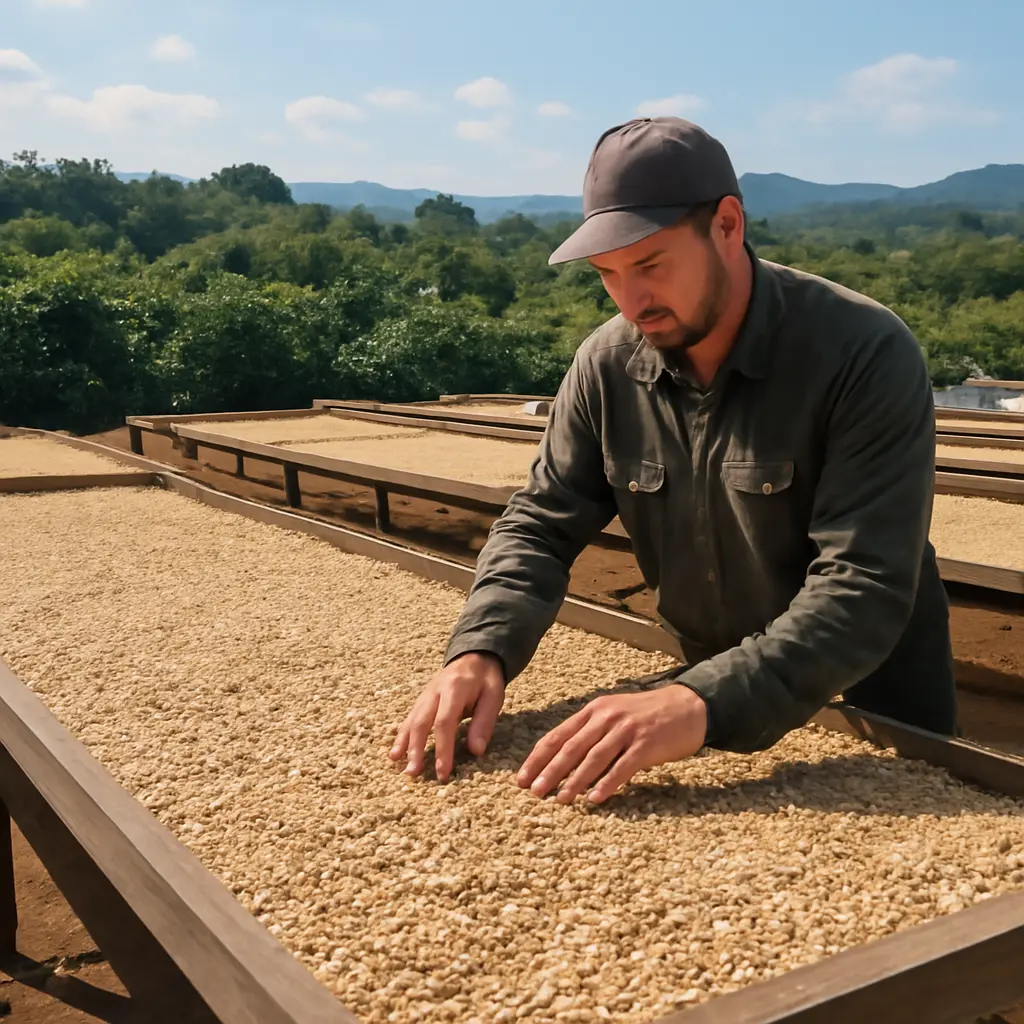
Coffee processing is the set of steps that turns harvested coffee cherries into stable, green coffee beans ready for roasting. Washing, fermenting, and drying are not merely cleanup tasks: they shape how much fruit material remains around the seed, how microbes and enzymes alter that material, and how safely the beans can be stored. The International Coffee Organization estimates that more than 2.25 billion cups of coffee are consumed worldwide each day, making consistent processing important to farmers, traders, roasters, and drinkers. The washed method removes the fruit before drying; fermentation helps loosen remaining mucilage; and controlled drying reduces moisture while protecting quality. Together, these choices influence flavor, defects, shelf life, and the value a coffee can earn.
Coffee processing: how washing, fermentation, and drying shape flavor
A coffee cherry is the fruit of the coffee plant. Beneath its skin and pulp are the seeds commonly called coffee beans, covered by sticky mucilage and layers of parchment and silverskin. The Specialty Coffee Association describes green coffee processing as the removal of fruit layers and preparation of the seed for storage and roasting. Processing choices are often grouped into washed, natural, and honey methods, with variations in fermentation and drying within each. They affect the coffee’s flavor potential, but do not work alone: cultivar, growing conditions, harvest ripeness, roasting, and brewing also matter.
Washing removes fruit and prepares coffee for fermentation
Washing is the separation of unwanted or excess fruit material from harvested cherries and parchment coffee, usually using water and mechanical equipment. In the washed process, producers first remove the skin and pulp with a depulper, then remove mucilage through fermentation, washing, or a combination of both. The resulting parchment coffee is dried before its protective parchment layer is removed during milling.
Sorting and depulping: selecting ripe cherries and removing the skin
Sorting separates ripe cherries from underripe, overripe, damaged, or foreign material. Producers may use hand sorting, flotation tanks, screens, or mechanical equipment. The Food and Agriculture Organization of the United Nations notes that processing begins with sound, ripe fruit; defects at this stage can carry through to the finished cup. Depulping then removes the cherry’s outer skin and much of its pulp, exposing the mucilage-coated parchment. It does not remove the seed’s flavor or guarantee a particular taste, but it sets up the next processing stage.
Washing: removing loosened mucilage and residues
After fermentation, parchment coffee is washed to remove detached mucilage and residual fermentation material. Clean water and well-managed channels or tanks help producers separate beans and reduce contamination. Water use varies widely with equipment and practice; the International Trade Centre’s coffee-processing guidance describes water-efficient systems as an important way to reduce the environmental burden of wet processing. Washing can produce a clean, distinct cup profile, but that is a tendency rather than a guarantee: cultivar, fermentation control, drying, and roasting all contribute to the result.
Fermentation loosens mucilage and influences coffee flavor
Coffee fermentation is the microbial and enzymatic breakdown of substances in the fruit, especially the sugars and pectins in mucilage. In washed coffee, fermentation makes the sticky layer easier to remove. The Specialty Coffee Association’s processing resources emphasize that fermentation outcomes depend on time, temperature, oxygen exposure, water, and the condition of the fruit. It is therefore a managed process, not a single fixed recipe; excessive or poorly controlled fermentation can cause unwanted sour, alcoholic, or otherwise defective notes.
Wet fermentation: time, temperature, and water matter
In wet fermentation, depulped coffee is held in tanks, either submerged in water or fermented without added water, until mucilage loosens. The duration can range from hours to more than a day, depending on local temperature, microbial activity, fruit condition, and producer practice. Rather than relying on a universal clock, producers can assess whether the parchment feels clean and the mucilage has separated. Researchers writing in the journal Applied and Environmental Microbiology have documented diverse microbial communities during coffee fermentation, showing why the same method can behave differently across farms and conditions.
Dry and controlled fermentation: alternative approaches
Dry fermentation takes place without submerging the depulped coffee, while controlled approaches may regulate temperature, oxygen, time, or microbial conditions more deliberately. Some producers also ferment whole cherries, as in certain natural-process or experimental lots. These methods can influence the formation and movement of organic acids and aroma precursors, but claims that one fermentation style reliably creates a specific tasting note should be treated cautiously. Studies in coffee science report that processing can change chemical composition, while the final sensory result also depends on the green bean, roast, and brewing method.
Drying stabilizes coffee and protects its quality
Drying reduces the water content of processed coffee so it can be stored and transported with lower risk of mold, spoilage, and quality loss. It follows washing in the washed method, but natural coffees are dried with the fruit still attached, and honey coffees are dried with some mucilage remaining. The International Trade Centre’s coffee guidance commonly gives a target of roughly 10–12% moisture for properly dried green coffee; buyers and standards may specify ranges and measurement methods. Even drying is as important as reaching the target: wet pockets can deteriorate while overly rapid or uneven drying can damage quality.
Sun drying and raised beds
Sun drying uses patios, tarpaulins, or raised beds exposed to ambient air and sunlight. Raised beds allow air to circulate around the coffee and make it easier to turn the beans regularly. Drying time varies with weather, layer depth, airflow, and whether fruit remains on the seed; it can take several days or longer. Producers need to protect coffee from rain and excessive heat, and turn it often enough to limit uneven moisture and fermentation during drying. A drying chart could compare moisture content over time for washed, honey, and natural lots, while noting that climate and bed management make the curves vary.
Mechanical drying and moisture checks
Mechanical dryers use heated air to shorten or supplement open-air drying, which can be useful during wet weather or at larger processing volumes. Temperature and airflow must be managed to avoid heating the beans too aggressively or drying their outer layers faster than their interiors. Producers and mills use moisture meters, sampling, and sometimes water-activity measurements to judge stability. The International Organization for Standardization publishes methods for assessing green coffee moisture, underscoring that consistent measurement matters for trade and storage rather than relying on touch alone.
Processing methods create different flavor contexts
The main processing hyponyms—washed, natural, and honey—describe how much of the fruit is removed before drying. They are useful shorthand for a coffee’s production history, not flavor guarantees. Across all three methods, careful harvest selection, clean equipment, fermentation control, and uniform drying help preserve the seed’s quality.
Washed coffee: fruit removed before drying
Washed coffee is depulped, fermented or mechanically demucilaged, washed, and then dried as parchment coffee. Because most fruit material is removed before drying, the method is often associated with a clearly expressed acidity and a more distinct impression of the coffee’s origin. These descriptions are common sensory tendencies, not a scientific promise that every washed coffee will taste the same. For example, a washed lot from a high-altitude farm may still differ substantially from another washed lot because of variety, soil, maturity, and roast.
Natural and honey coffee: more fruit remains during drying
Natural coffee is dried as a whole cherry, while honey coffee is depulped but dried with some or most mucilage still attached. The longer contact with fruit material can contribute to fruit-forward, sweet, or fuller-bodied sensory impressions, although results vary with climate and drying management. Natural processing has a long history in regions where water is limited or dry conditions favor whole-cherry drying; honey processing is used in several producing countries and can be adjusted by leaving different amounts of mucilage. The methods can save or reduce water use compared with some washed systems, but they require careful sorting and drying to avoid defects.
Quality, environment, and the practical limits of processing
Processing links cup quality to farm economics and environmental management. A well-executed process can help preserve a clean, traceable lot and support differentiated pricing, while mistakes can create defects that roasting cannot reliably remove. Wet processing also generates wastewater containing organic matter from pulp and mucilage. The International Coffee Organization and other sector bodies have highlighted the importance of treating or responsibly managing coffee-processing effluent to reduce pollution of waterways.
Water use and wastewater management
Water is used in wet milling for flotation, transport, washing, and equipment cleaning, though the amount depends heavily on machinery and recycling practices. Recirculating water, using ecological or mechanical demucilagers, and treating wastewater can reduce impacts. Coffee wastewater is rich in biodegradable organic material; if discharged untreated, it can lower dissolved oxygen in receiving waters and harm aquatic ecosystems. Producers should follow local regulations and use appropriate treatment rather than assuming that a small processing volume is environmentally harmless.
Traceability and repeatable quality
Recording harvest dates, cherry condition, fermentation duration, temperature, washing, drying conditions, and final moisture helps producers reproduce successful lots and investigate defects. The Specialty Coffee Association’s cupping protocols provide a standardized way for trained tasters to assess coffee attributes, but sensory evaluation should be paired with production records and green-coffee checks. For a farm or cooperative, a simple batch log can connect process decisions to cup scores, buyer feedback, and returns—turning processing from guesswork into a learning system.
Conclusion: processing turns fruit into a stable, expressive coffee seed
Washing removes fruit residues, fermentation loosens mucilage and alters the conditions around the seed, and drying stabilizes coffee for storage and trade. The washed, natural, and honey methods differ chiefly in how much fruit remains during drying, producing useful but non-deterministic flavor tendencies. Because coffee is consumed at a global scale—more than 2.25 billion cups daily by the International Coffee Organization’s estimate—careful processing matters for flavor, livelihoods, and environmental stewardship. Readers can explore producer and roaster process notes, compare coffees from the same origin processed differently, and look for transparent information about fermentation, drying, and moisture management.
Sources: International Coffee Organization, “Coffee and Trade Statistics,” https://www.ico.org/; Specialty Coffee Association, “Coffee Processing,” https://sca.coffee/research/coffee-processing; Food and Agriculture Organization of the United Nations, “Coffee Processing,” https://www.fao.org/; International Trade Centre, “The Coffee Guide,” https://www.intracen.org/resources/publications/the-coffee-guide-fourth-edition; De Bruyn et al., “Exploring the Impacts of Postharvest Processing on the Microbiota and Metabolite Profiles during Green Coffee Bean Production,” Applied and Environmental Microbiology, 2017, https://journals.asm.org/doi/10.1128/AEM.02398-16; International Organization for Standardization, ISO 6673:2003, Green coffee—Determination of loss in mass at 105 °C, https://www.iso.org/standard/38485.html.