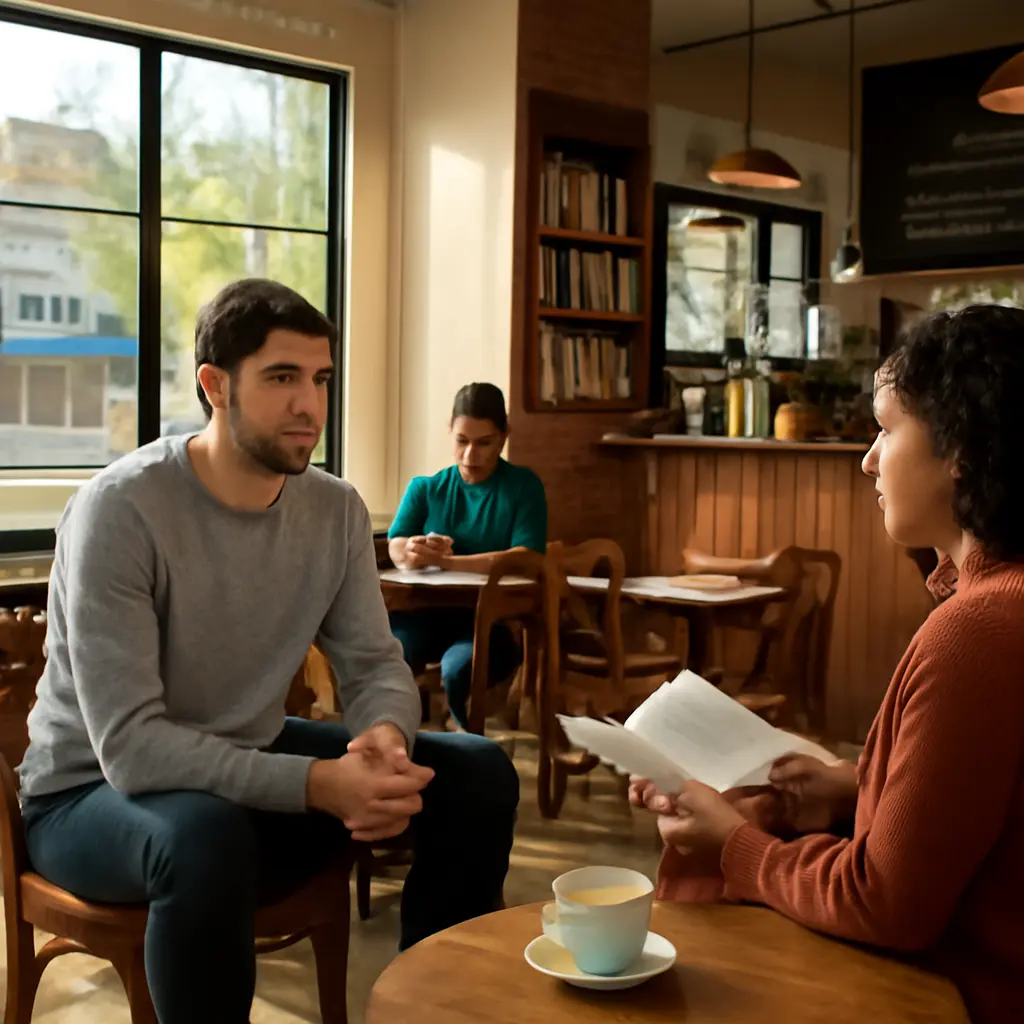
A coffee shop can be more than a place to buy a drink: it can function as a shared neighborhood room where people meet, listen, read, and spend time without needing a formal invitation. Open mic nights and book clubs give that everyday space a purpose, turning casual visits into repeated social rituals. This matters in a country where the National Coffee Association reported in 2024 that 67% of American adults had consumed coffee in the past day, while the U.S. Surgeon General has emphasized the importance of social connection to health and well-being. Together, these trends help explain why cafés can serve as modern living rooms—and why their value depends on welcoming design, affordable participation, and room for different kinds of community.
Coffee shops as modern living rooms: the “third place” attribute
Sociologist Ray Oldenburg popularized the term “third place” for informal public settings distinct from home, the first place, and work, the second. In his account, a third place is accessible, comparatively low-cost, welcoming to regulars and newcomers, and organized around conversation rather than status. Coffee shops are not automatically third places: a café that discourages lingering, prices out local customers, or offers no comfortable shared space may function mainly as a retail outlet. But cafés that invite people to stay can provide some of the everyday social infrastructure Oldenburg described.
The idea has practical relevance beyond cafés. In its 2023 advisory on social connection, the U.S. Surgeon General described loneliness and isolation as widespread concerns and called for stronger social infrastructure, including places and institutions that help people connect. A coffee shop cannot replace close relationships or public services, but it can make low-pressure contact easier: recognizing a regular, sharing a table, or joining a scheduled activity. Common café-based third places include neighborhood coffeehouses, independent book cafés, student cafés, and community-oriented chains.
Everyday sociability and the “third place”
Everyday sociability means the small, repeated interactions that make a public setting feel familiar: greetings, brief conversations, shared routines, and seeing known faces. These encounters are not equivalent to deep friendship, but they can reduce the distance between being alone and feeling part of a community. A café’s regular hours, visible seating, and informal atmosphere help create opportunities for such contact.
The American Time Use Survey, produced by the Bureau of Labor Statistics, tracks how people spend their time, including socializing and leisure; it does not establish that café visits themselves prevent loneliness. That distinction is important: the social value of a coffee shop depends on how people use it and whether they can access it. A chart comparing café participation by age or neighborhood would need to distinguish casual co-presence from meaningful social interaction rather than treating them as the same measure.
A living room that remains a business
The living-room comparison has limits. Cafés sell food and drink, pay rent and wages, and need enough customer turnover to remain open. Customers may feel welcome to linger, but that welcome is shaped by business rules, purchase expectations, seating design, and opening hours. A genuinely community-minded café makes those expectations legible and avoids treating every quiet visitor as a problem.
This tension connects the café’s everyday role to its programmed events. Open mics and book clubs do more than fill seats: they create reasons to return, introduce people to one another, and give a room a shared identity.
Open mic nights create participatory café culture
An open mic night is a public event in which performers sign up to present short acts—often poetry, music, comedy, or storytelling—within a time limit. Unlike a conventional concert, it gives community members a chance to participate as performers as well as audience members. The format can be informal, but clear expectations around sign-ups, time, sound levels, and respectful listening make it more accessible.
Open mics are a hyponym of participatory cultural programming: a specific kind of event within a broader category that also includes readings, songwriter circles, storytelling sessions, and community showcases. They turn the café from a place where people happen to share space into a place where they share attention. Their cultural importance is difficult to summarize in a single national statistic, since local events are organized independently and are not consistently counted. Attendance records, repeat participation, and performer sign-ups can offer useful local measures.
Poetry, music, comedy, and storytelling
These formats offer different ways to take part. Poetry and storytelling foreground language and personal experience; music creates a shared listening event; comedy depends on timing and audience response. A venue can rotate formats or combine them, helping people with different interests find a reason to attend. Short sets and a welcoming host can make a first performance feel less intimidating.
The National Endowment for the Arts’ Survey of Public Participation in the Arts documents Americans’ engagement with arts activities, including attendance and creative participation. It provides a broader context for community performance, though it should not be read as a count of café open mics specifically. At the local level, organizers can validate an event’s reach by tracking attendance, the share of first-time performers, and whether the audience reflects the neighborhood.
Low-barrier participation and practical access
A low-barrier event reduces obstacles to joining in. Helpful practices include free or modest-cost entry, a simple sign-up process, clear performance limits, accessible seating, and a stated code of conduct. Hosts can also offer a quiet audience option, explain whether photography is allowed, and ensure that performers know how to request accommodations.
These details affect who feels able to participate. A stage, microphone, or crowded room can create barriers for people with mobility, sensory, or communication needs; scheduling and transit access can also determine who can attend. The Americans with Disabilities Act provides accessibility requirements for covered public accommodations, while event organizers can go further through thoughtful room layouts, captioning where feasible, and advance information about the venue.
Book clubs turn café visits into recurring reading communities
A book club is a group that reads selected material and meets to discuss it. In a café, the club combines a structured conversation with the informal atmosphere of a public gathering place. It is a type of reading group, alongside library circles, workplace clubs, and online reading communities. The recurring schedule matters: a monthly meeting gives members a dependable reason to return and a shared subject that helps conversation begin.
The National Endowment for the Arts’ 2022 Survey of Public Participation in the Arts reported that 48.5% of U.S. adults read at least one book for pleasure during the preceding year. That figure describes individual reading, not book-club membership, but it indicates a substantial base of recreational readers. Libraries and bookstores remain central to reading communities; cafés can complement them by offering a neutral meeting place, especially when organizers coordinate purchases, borrow books through libraries, or choose titles available in multiple formats.
Discussion, belonging, and shared interpretation
A discussion-based book club uses reading as a common starting point, not a test of literary expertise. Members may compare interpretations, connect a story to personal experience, or disagree about a character’s choices. A facilitator can make space for quieter members by using open questions and inviting participants to pass rather than requiring everyone to speak.
The club’s social benefit comes partly from repetition and shared attention: people meet again, remember earlier conversations, and build familiarity over time. This is consistent with the Surgeon General’s emphasis on social connection, but it should not be overstated as a clinical intervention. A café book club is a community activity, not a substitute for mental-health care or a guaranteed remedy for isolation.
Inclusive formats and thoughtful facilitation
Inclusive book clubs make participation flexible. They can select short works, offer audiobooks or large-print editions, provide questions in advance, and choose meeting times that work for different schedules. Rotating genres and authors can broaden the conversation, while a clear agreement about respectful discussion helps groups handle sensitive subjects.
A café’s physical setup also matters. A group needs enough seats, manageable background noise, and a way to hear one another without blocking other customers. Reserving a corner or meeting table, agreeing on a purchase policy, and giving the venue a head count in advance can make a recurring club sustainable for both participants and staff.
Coffee-shop gatherings depend on design, access, and local partnership
A successful community café is not defined by events alone. It depends on the relationship between space, cost, programming, and neighborhood needs. Open mics prioritize performance and audience attention; book clubs prioritize conversation and recurring membership. Both work best when the café treats gathering as part of its identity while remaining transparent about the resources and rules required to host it.
The third place in practice: neighborhood examples
A practical model might pair a weekly open mic with a monthly library-supported book club. The café provides tables and basic equipment, a local host manages performers, and a nearby library helps participants obtain the selected title. This division of roles can lower costs and connect cultural activity with existing community resources. It is an illustrative model, not a claim about a single measured national program.
Organizers can evaluate such a program with a simple dashboard: event attendance, repeat visits, performer or member sign-ups, accessibility requests met, and participant feedback. If a chart is included, it could compare attendance across event types and months, while a separate note explains that attendance does not by itself measure belonging or social connection.
Balancing hospitality with economic sustainability
Events require staff time, space, utilities, and sometimes sound equipment. A café can balance hospitality with sustainability by scheduling events during slower periods, setting a transparent minimum purchase expectation where appropriate, seeking local arts grants, or partnering with libraries and community organizations. The goal is not to make every gathering profitable immediately, but to ensure that the arrangement is fair to workers, participants, and the business.
The National Coffee Association’s 2024 report found that 67% of American adults drank coffee in the past day, evidence of coffee’s broad place in daily life—not proof that cafés automatically create community. The distinction matters: a popular product can draw people through the door, but welcoming practices and meaningful shared activities help turn a visit into a social experience.
Conclusion: make room for everyday connection
Coffee shops can act as modern living rooms when they offer more than transactions: accessible space, familiar routines, and opportunities to participate. Open mic nights make the café a small stage for local expression; book clubs make it a recurring forum for reading and conversation. Research on social connection and arts participation provides context for why these gatherings matter, while also reminding us not to confuse attendance with proof of improved well-being.
For café owners, organizers, and neighbors, a useful next step is to start small: ask what the community wants, establish clear and inclusive event practices, and review attendance and feedback after each gathering. Supporting a local open mic, joining a book club, or partnering with a library can help keep everyday public life welcoming—and give more people a place to feel at home beyond their own front door.
Sources: Ray Oldenburg, The Great Good Place, 1989, https://www.1989books.com/greatgoodplace; U.S. Surgeon General, Our Epidemic of Loneliness and Isolation: The U.S. Surgeon General’s Advisory on the Healing Effects of Social Connection and Community, 2023, https://www.hhs.gov/sites/default/files/surgeon-general-social-connection-advisory.pdf; National Coffee Association, National Coffee Data Trends 2024, https://www.ncausa.org/Research-Trends/National-Coffee-Data-Trends; U.S. Bureau of Labor Statistics, American Time Use Survey, https://www.bls.gov/tus/; National Endowment for the Arts, Survey of Public Participation in the Arts, 2022, https://www.arts.gov/impact/research/arts-data-profile-series/adp-30; U.S. Department of Justice, Americans with Disabilities Act, https://www.ada.gov/.