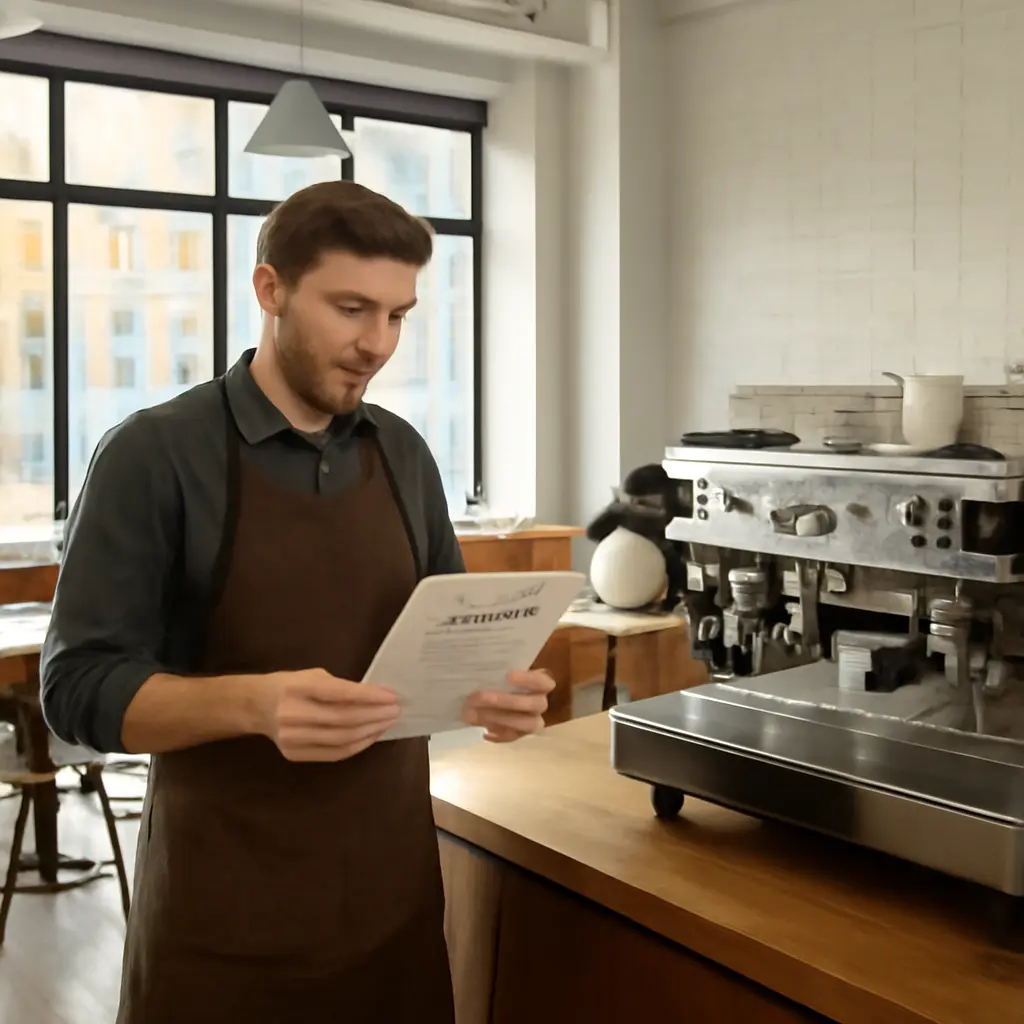
Leasing a commercial espresso machine means paying to use professional coffee equipment under an agreement rather than purchasing it outright. For a new café, leasing can preserve cash for rent, inventory, staffing, and marketing while providing access to equipment that may otherwise require a substantial upfront investment. It is not automatically cheaper: the right choice depends on the contract’s total cost, maintenance terms, expected sales, and how long the machine will stay in service. Comparing lease structures, service coverage, and break-even costs helps a new operator decide whether leasing is a practical way to start.
Leasing reduces the upfront burden of commercial espresso equipment
A commercial espresso machine is a durable business asset designed for repeated, high-volume beverage preparation. Leasing gives a business the right to use equipment for a contracted period in exchange for scheduled payments. The U.S. Small Business Administration explains that leasing can require less cash at the outset than buying, but may cost more over time; it recommends comparing the full obligations of each option rather than judging by the monthly payment alone.
That distinction matters at launch, when cash is needed for several expenses at once. The National Restaurant Association’s 2024 State of the Restaurant Industry report projected U.S. restaurant sales of $1.1 trillion for 2024, while also describing persistent cost pressures for operators. The industry-wide figure does not predict an individual café’s performance, but it underscores why new businesses need to plan carefully for both revenue uncertainty and operating costs.
Preserving startup cash for essential operating expenses
Working capital is money available to cover near-term business needs, such as payroll, ingredients, utilities, and occupancy costs. Leasing can preserve more of that cash than an outright purchase because payments are spread across the contract term. That can be useful when a café is still building a customer base or when opening costs have already consumed a large share of available funds.
However, a lower initial outlay is not a saving by itself. A prospective lessee should compare any deposit, delivery and installation charges, recurring payments, taxes, insurance requirements, and end-of-term fees with the cash price of the same machine. The SBA’s guidance on leasing emphasizes reviewing the agreement’s complete cost and conditions, including responsibility for repairs and the options available when the lease ends.
Matching payments to uncertain early-stage demand
A new café rarely knows its long-term drink volume with certainty. Leasing can make it possible to begin with suitable equipment without committing as much capital to an asset before demand is established. But the payment remains due even if sales fall short, so operators should test whether conservative sales projections can support the lease alongside rent, wages, supplies, and other fixed obligations.
For context, the U.S. Bureau of Labor Statistics reported that food-away-from-home prices rose 4.1% over the 12 months ending in December 2024. That measure tracks consumer prices, not café equipment or a particular shop’s costs, but it illustrates the changing cost environment in which a new food-service business must set prices and manage margins.
Leasing options shape the equipment’s service and ownership terms
“Lease” can describe different commercial arrangements, and the label alone does not reveal who owns the machine, who maintains it, or what happens at the end. The Financial Accounting Standards Board’s Topic 842 defines a lease as a contract that conveys the right to control the use of identified property, plant, or equipment for a period of time in exchange for consideration. For a café owner, the practical questions are the payment schedule, service responsibilities, contract flexibility, and end-of-term options.
Equipment-only leases
An equipment-only lease primarily provides use of the espresso machine, while the café may be responsible for routine care, repairs, and service calls. This arrangement can suit an operator who already has a reliable technician or can arrange maintenance independently. Before signing, confirm whether the agreement covers delivery, installation, water filtration, preventive maintenance, and replacement parts; these items can materially affect the real cost of keeping the machine operational.
Leases that bundle maintenance or service
A service-inclusive lease combines equipment use with some level of maintenance or technical support. This can make costs more predictable and provide access to help when the machine needs attention, but “service included” is not specific enough to rely on without written terms. Check response times, service-hour limits, travel charges, exclusions, loaner-machine availability, and whether damage caused by misuse is covered.
Downtime has a commercial cost: a machine that cannot produce drinks may disrupt sales and customer service. A service package is therefore most valuable when its response commitments match the café’s trading hours and the provider can support the machine locally. Ask for the service-level terms in the contract, not just a salesperson’s verbal assurance.
Fair-market-value and purchase-option leases
Some agreements offer a return, renewal, or purchase option at the end of the term. Under a fair-market-value structure, a business may be able to buy the equipment for its then-current market value, subject to the contract. Other arrangements specify a purchase amount or provide a different ownership path. These structures are not interchangeable, so the café should establish in writing whether it can return the machine, extend the lease, or buy it—and what each choice will cost.
A purchase option can be useful if the machine remains reliable and fits the business’s needs. Returning the equipment may be preferable if the café expects to change capacity or technology. Either way, document the machine’s condition, return requirements, and any fees for wear, damage, or early termination before committing.
A full-cost comparison shows when leasing beats buying
Leasing beats buying only when its financial and operational advantages outweigh its total cost for the business’s intended period of use. Compare equivalent machines and service levels over the same time horizon. The Consumer Financial Protection Bureau advises consumers to examine the total amount paid and the terms of financing rather than focusing only on a periodic payment; the same basic discipline helps a business evaluate equipment agreements.
Calculate total payments, fees, and end-of-term costs
For each option, make a written estimate that includes all expected cash outflows. A lease comparison should include the deposit, every scheduled payment, required insurance, delivery, installation, service charges, and any return or purchase cost. A purchase comparison should include the equipment price, financing interest if applicable, maintenance, repairs, and a realistic estimate of resale value. Do not assume that a tax deduction makes one option cheaper; tax treatment depends on the business and agreement and should be confirmed with a qualified tax professional.
A useful decision aid is a simple comparison table showing estimated total cost at several time horizons—for example, the end of the lease term and a longer period of ownership. If lease payments continue beyond the point at which a purchased machine would be paid off, that difference should be visible before signing.
Assess reliability, capacity, and service downtime
The best financial option still has to meet the café’s production needs. Compare group count, boiler configuration, recovery time, water requirements, electrical or plumbing needs, and the manufacturer’s service support. A machine that is undersized can slow service during busy periods, while one with more capacity than the business needs may add unnecessary cost.
Ask the supplier for the machine’s age and condition if it is used, its maintenance history, warranty coverage, and the availability of parts and technicians. For a lease, verify who pays for repairs and whether the agreement provides a replacement during extended service interruptions. For a purchase, budget for scheduled maintenance rather than treating it as an unexpected exception.
Check contract flexibility and business risk
A new café’s location, menu, and sales mix may change. Review whether the lease permits early termination, transfer to a new owner or location, equipment upgrades, or a change in payment terms. Also check whether the agreement requires a personal guarantee, what happens after missed payments, and whether the business remains liable if it closes or relocates.
These provisions matter because a lease is a commitment, not simply a month-to-month rental unless the contract says so. Have an accountant or attorney review unfamiliar financing, guarantee, and termination language, especially when the agreement extends beyond the café’s initial launch period.
A practical startup example illustrates the trade-off
Consider a hypothetical neighborhood café choosing between buying a machine and leasing a comparable model with maintenance. The lease requires less cash at opening, leaving more funds for opening inventory and payroll. In exchange, the café pays over time and may not own the machine unless it exercises a purchase option. Buying costs more upfront, but could cost less over a longer period if the machine is dependable, service is affordable, and the café keeps it after it is paid off.
The owner can make the decision more concrete by comparing three scenarios: slower-than-expected sales, the café’s base forecast, and a busier-than-expected launch. For each, estimate whether the business can meet the lease payment and operating expenses, and compare the lease’s total cost with purchase, maintenance, and likely resale value. This is an illustrative decision method, not a claim about a particular café’s actual results.
A chart can make the comparison clearer: plot cumulative lease payments and estimated ownership costs by month, then mark the lease’s return or purchase-option date. The point at which one line passes the other is not the only deciding factor, but it highlights how the answer changes with the length of use and the value of bundled service.
Conclusion: Lease strategically, not automatically
Leasing a commercial espresso machine can be a strong choice for a startup café because it reduces the initial cash burden, may include maintenance, and can preserve flexibility while demand develops. Its value depends on the specific lease structure, service commitments, capacity, and end-of-term rules. Buying may be more economical over a longer ownership period when the business has enough capital and can manage maintenance and repairs affordably.
Before choosing, compare the complete cost of leasing and buying over realistic time horizons, stress-test payments against conservative sales, and have the contract reviewed when its obligations are unclear. Request written quotes for equivalent machines and service levels, then choose the option that protects both cash flow and reliable service. Further reading from the Small Business Administration and Financial Accounting Standards Board can help clarify leasing considerations and accounting treatment.
Sources: U.S. Small Business Administration, “Buy an existing business or franchise,” https://www.sba.gov/business-guide/plan-your-business/buy-existing-business-or-franchise; National Restaurant Association, “2024 State of the Restaurant Industry,” https://restaurant.org/research-and-media/research/research-reports/state-of-the-restaurant-industry/; U.S. Bureau of Labor Statistics, “Consumer Price Index—December 2024,” https://www.bls.gov/news.release/archives/cpi_01152025.htm; Financial Accounting Standards Board, Accounting Standards Codification Topic 842, Leases, https://asc.fasb.org/; Consumer Financial Protection Bureau, “What is the total cost of a loan?” https://www.consumerfinance.gov/ask-cfpb/what-is-the-total-cost-of-a-loan-en-1989/