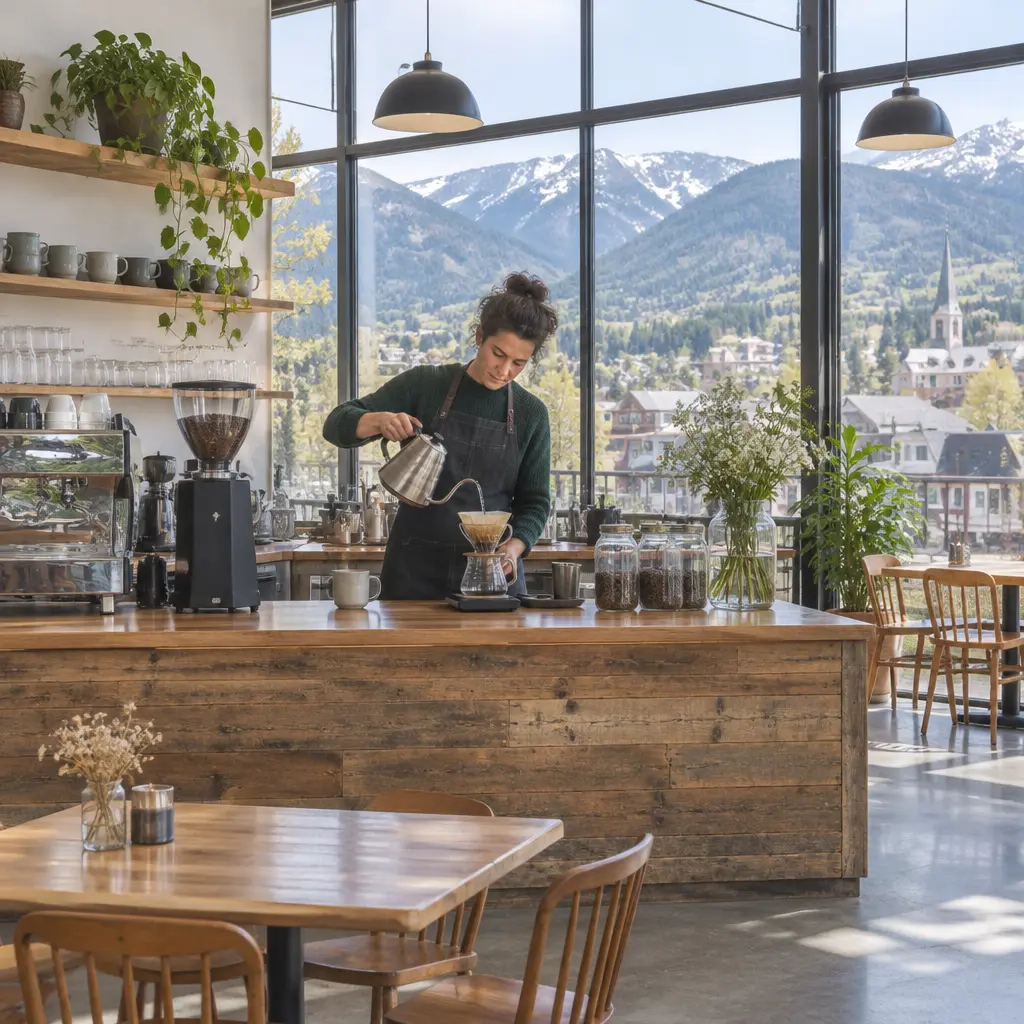
Coffee can taste different at altitude because brewing depends on water temperature, pressure, and the way dissolved compounds move from grounds into water—not simply on the height of the café. At high elevations, water boils at a lower temperature, which can make a brew taste thinner or less extracted if the recipe stays unchanged. Altitude itself does not automatically make coffee sour or bitter, though: roast, grind, water chemistry, brewing method, and taste preferences matter too. Understanding the boiling-point change, distinguishing extraction problems from flavor preferences, and making small adjustments to temperature, grind, and brew time can help you dial in a better cup.
Boiling-point changes explain why altitude affects coffee brewing
Altitude is elevation above sea level. As elevation rises, atmospheric pressure falls; because water boils when its vapor pressure matches the surrounding pressure, it reaches a boil at a lower temperature. The National Institute of Standards and Technology (NIST) publishes the pressure and water-property data used to calculate this relationship. Near sea level, water boils at about 100°C (212°F); around 1,500 meters (4,900 feet), it boils at roughly 95°C (203°F). These are approximate reference values, since local pressure and weather also affect the result.
That lower ceiling matters because brewing water transfers heat to coffee grounds and helps dissolve flavor compounds. The Specialty Coffee Association’s brewing guidance commonly places hot-brew water in a range around 90–96°C (195–205°F), although the ideal point depends on the coffee and method. At elevations where water cannot reach the upper part of that range, a brewer may have less thermal headroom. This can slow extraction and change the balance of the cup, especially if a recipe relies on near-boiling water.
Pressure, boiling point, and the practical temperature limit
The boiling point is the temperature limit for ordinary open-pot or kettle water at a particular pressure. A kettle may indicate that water has boiled, but at altitude that water can be several degrees cooler than boiling water at sea level. A rolling boil therefore does not guarantee the same brew temperature from one location to another. For repeatable results, use a thermometer or a temperature-controlled kettle when possible, and measure water temperature where it meets the grounds rather than assuming a boil means a fixed temperature.
Extraction—not altitude alone—shapes flavor
Extraction is the transfer of soluble coffee compounds from ground coffee into brewing water. The Specialty Coffee Association’s brewing-control concepts treat strength and extraction yield as distinct measurements: a cup can be strong but under-extracted, or weak but well-extracted. If cooler water extracts less efficiently under an unchanged recipe, a high-altitude cup may seem sharp, sour, hollow, or short on sweetness. But these sensations are not diagnostic by themselves; the coffee, water, grind, ratio, and brewing technique can produce similar impressions.
A useful bridge between the science and the cup is to think in terms of brew variables. Lower temperature is one possible cause of a changed result, but grind size, contact time, agitation, and coffee-to-water ratio also affect extraction. Adjusting one variable at a time makes it easier to identify what is actually changing the flavor.
Flavor differences at altitude depend on brewing method and recipe
There is no single “altitude flavor.” The same coffee may taste different because the brewing water is cooler, because a brewer’s cycle behaves differently, or because the recipe was developed for another environment. The effect is usually most noticeable when brewing close to the water’s local boiling point or when a method has limited control over temperature and contact time.
Pour-over and batch drip
Pour-over and drip brewing expose grounds to hot water for a relatively short period. If the water is cooler than expected, the cup may lose sweetness and taste less developed. Start with the same coffee dose and water ratio, then make a small change: use the hottest safe water available, grind a little finer, or extend the pour and drawdown slightly. Change only one factor at a time, since a finer grind can also slow flow and increase bitterness or astringency.
Immersion brewing and espresso
Immersion methods such as French press and cupping keep grounds in contact with water for longer, which can partly compensate for cooler brewing temperatures. A modestly longer steep may help, though excessive time can produce a heavier or harsher cup. Espresso is more equipment-dependent: machines regulate brew temperature and pressure, while elevation can also affect pump and pressure behavior. If espresso changes after moving to a high-altitude location, check the machine’s temperature stability and shot parameters rather than assuming the coffee itself has changed.
The coffee’s origin and roast remain important
Altitude can also describe where coffee was grown, which is a separate issue from brewing at high elevation. Growing elevation influences temperature, maturation, and farming conditions, but it does not guarantee a particular flavor or quality. A high-grown coffee brewed at sea level and a low-grown coffee brewed in a mountain town are different comparisons. Keep the distinction clear: growing altitude affects the green coffee’s development, while brewing altitude changes local air pressure and the temperature available to the brewer.
This distinction helps avoid overgeneralizing. If a cup tastes different after travel, consider the brewing environment first, then check whether the coffee, water, grinder, or equipment also changed.
How to adjust coffee brewing at high altitude
A practical adjustment begins with a baseline recipe and a clear taste observation. Keep the coffee dose, water amount, and equipment consistent, then change the variable most likely to address the problem. The Specialty Coffee Association’s brewing standards offer useful reference points, but they are starting guides rather than rules for every coffee or elevation.
Measure the water temperature you can actually reach
At high elevation, a kettle’s boil may fall below the temperature used in a sea-level recipe. Measure the water if you can. If it is cooler than your previous brewing temperature, first try brewing promptly after the kettle reaches its local boil; letting it sit can cool it further. Do not try to force an open kettle above the local boiling point. Pressure-rated equipment is a different category and should be used only as its manufacturer directs.
Adjust grind, time, and agitation gradually
If the cup tastes thin, sharp, or underdeveloped, try a slightly finer grind or a longer contact time. For pour-over, a slower pour or gentle, consistent agitation may help water contact the grounds more evenly. For immersion, extend the steep in small increments. If the result becomes dry, bitter, or harsh, back off: the grind may be too fine, the contact too long, or agitation too strong. These changes are troubleshooting tools, not guaranteed altitude-specific fixes.
Check water quality and brew ratio
Water chemistry can alter perceived acidity, sweetness, and clarity. The Specialty Coffee Association’s water guidance describes target characteristics for brewing water, including mineral content and alkalinity, because dissolved minerals influence extraction and flavor. If a recipe tastes different in a new location, compare filtered water sources and avoid assuming altitude is the only cause. Also verify the coffee-to-water ratio with a scale: changing the amount of coffee or water changes strength, which can be mistaken for an extraction problem.
A simple altitude troubleshooting sequence
- Use the same coffee, grinder, dose, water volume, and brewing method as your baseline.
- Measure or estimate the water temperature at the point of brewing.
- If the cup tastes underdeveloped, make one small change to grind size or contact time.
- Taste again and record the result; reverse the change if the cup becomes harsh or drying.
- Check water quality and equipment consistency before making further changes.
For example, a traveler who finds a familiar pour-over unexpectedly thin in a mountain town can first confirm that the kettle is reaching only a lower local boiling temperature. Rather than changing the dose, grind, and pouring style all at once, they can try a slightly finer grind while keeping the rest of the recipe fixed. That controlled test shows whether increased extraction improves the cup.
Conclusion: altitude is a brewing variable, not a flavor verdict
Coffee can taste different at altitude because lower atmospheric pressure lowers water’s boiling point, potentially reducing the heat available for extraction. The resulting cup may seem less sweet or less developed, but altitude does not dictate one flavor profile, and brewing temperature is only one part of the picture. Distinguish brewing elevation from the elevation where coffee was grown, and troubleshoot with measured temperature, small grind or time adjustments, consistent ratios, and attention to water quality.
If you brew regularly at elevation, record your local boiling temperature and keep notes on recipes that work. For further reading, consult the Specialty Coffee Association’s brewing and water-quality guidance and NIST’s water-property information. A few controlled tests can turn altitude from a source of guesswork into a manageable brewing variable.
Sources: National Institute of Standards and Technology, NIST Chemistry WebBook: Water, https://webbook.nist.gov/cgi/cbook.cgi?ID=C7732185; Specialty Coffee Association, Coffee Standards, https://sca.coffee/research/coffee-standards; Specialty Coffee Association, Water for Brewing Specialty Coffee, https://sca.coffee/research/coffee-standards; National Oceanic and Atmospheric Administration, Standard Atmosphere, https://www.noaa.gov/jetstream/atmosphere/standard-atmosphere