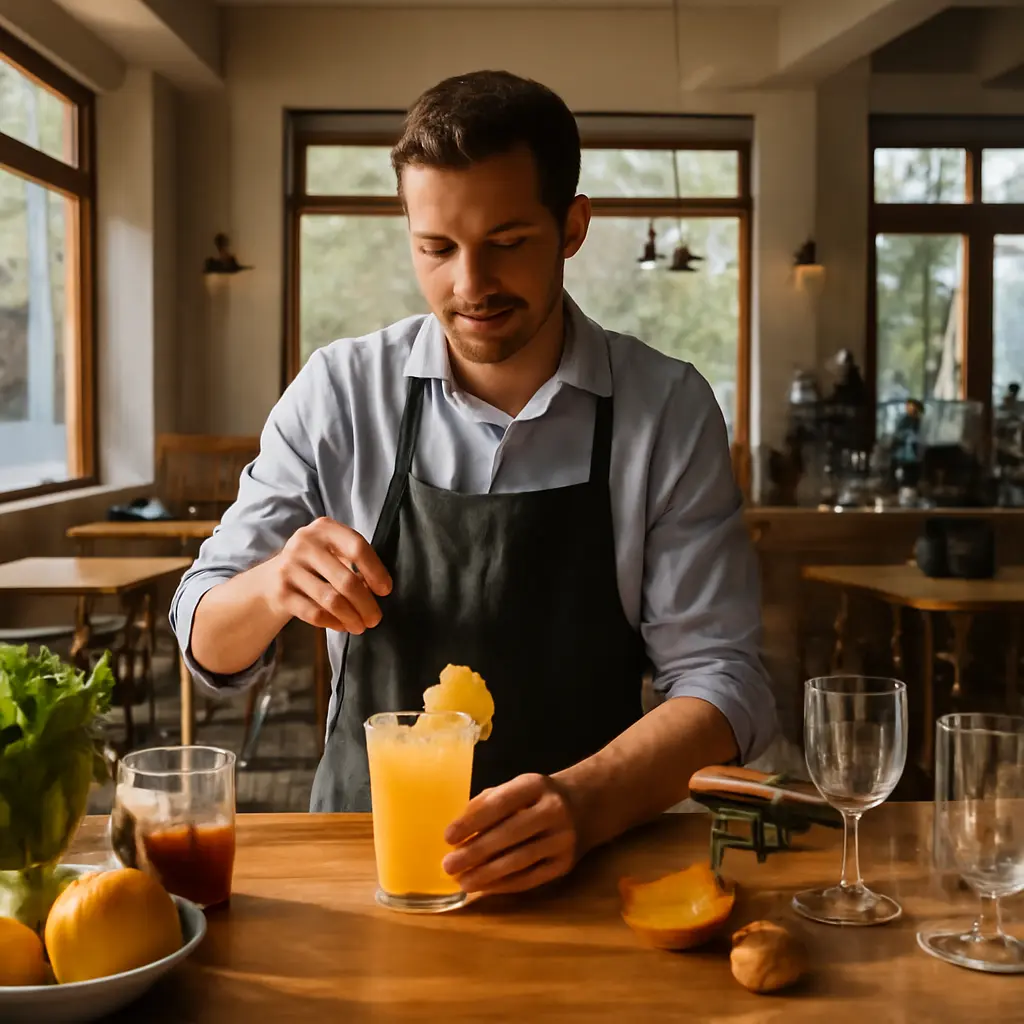
A signature beverage is a distinctive drink designed to express a business’s identity while giving customers a compelling reason to order it again. Creating one customers actually crave takes more than an unusual flavor: it requires a clear concept, balanced sensory appeal, reliable preparation, and repeated customer testing. The opportunity is meaningful: the National Restaurant Association’s 2024 industry report describes an increasingly competitive restaurant market, while its trend research identifies creative beverages and customization as areas of customer interest. The process below connects beverage positioning and flavor design with menu economics, testing, and operational consistency.
Define the signature beverage’s brand and customer attributes
A signature beverage is a drink a business deliberately differentiates through its flavor, presentation, naming, or preparation, and associates with its brand. There is no single regulatory or academic definition of “signature beverage”; this practical definition reflects how hospitality operators use the term. Its defining attributes are distinctiveness, customer relevance, repeatability, and commercial viability. A drink can be novel without being craveable, so a strong concept must connect a recognizable customer desire—such as refreshment, indulgence, or a memorable local flavor—to an experience competitors do not offer in quite the same way.
This distinction matters in a crowded market. The National Restaurant Association’s 2024 State of the Restaurant Industry report projected U.S. restaurant and foodservice sales of $1.1 trillion for that year, illustrating the scale of the sector and the pressure to give customers reasons to choose one venue over another. A signature drink can support differentiation, but its success should be judged by sales, customer feedback, and repeat orders—not by novelty alone.
Brand fit and customer occasion
Brand fit means the drink’s ingredients, name, appearance, and service style feel credible for the business. A neighborhood café might develop a lightly sweetened espresso tonic, while a coastal restaurant might build around citrus, herbs, and local produce. Start by identifying the occasion the beverage serves: morning energy, an afternoon treat, a celebratory toast, or a nonalcoholic pairing with dinner. The concept becomes stronger when it answers a specific customer need instead of trying to appeal to everyone.
Signature drink hyponyms: house, seasonal, and zero-proof
Common subtypes include house specialties, seasonal beverages, regional or locally sourced drinks, and zero-proof alternatives. A house specialty is available year-round and is closely tied to the brand; a seasonal drink uses ingredients or flavors associated with a limited period; a regional drink highlights local culinary identity; and a zero-proof drink is made without alcohol while retaining complexity and a sense of occasion. These categories can overlap. For example, a café’s year-round house drink might feature a seasonal fruit variation, while a restaurant’s zero-proof signature might showcase a regional botanical.
Design the signature beverage’s craveable flavor attributes
Flavor design is the deliberate balancing of taste, aroma, texture, temperature, and finish to create a satisfying drinking experience. The National Institute on Deafness and Other Communication Disorders explains that flavor reflects a combination of taste, smell, and other sensory information. That is why a drink’s aroma and mouthfeel can shape its appeal as strongly as its sweetness. A balanced beverage usually has a clear lead flavor, supporting notes, and enough acidity, bitterness, salt, spice, or texture to keep sweetness from becoming monotonous.
Build a balanced flavor structure
A practical development method is to choose one dominant flavor, one complementary flavor, and one contrasting element. For example, strawberry can lead, basil can provide an aromatic complement, and lemon can add contrast. In coffee drinks, espresso’s bitterness may be balanced by milk and a measured amount of syrup; in a sparkling drink, citrus acidity can keep fruit and sweetener lively. These are formulation principles rather than universal ratios, because ingredients vary in strength and customers differ in preference. Record the recipe by weight or volume, then adjust one component at a time so tasting results are interpretable.
Use aroma, texture, and temperature intentionally
Aroma creates expectations before the first sip, while texture and temperature influence how the drink feels and finishes. Fresh citrus zest, herbs, spices, foam, carbonation, crushed ice, or a creamy component can add sensory character, but each should serve the concept. Consider how dilution changes a drink over time: melting ice can soften acidity and sweetness, while carbonation can fade after pouring. Test the beverage as customers will receive it, including its glassware, garnish, ice, and time between preparation and consumption.
Offer inclusive choices without losing identity
A signature drink can accommodate different preferences through thoughtful options such as dairy-free milk, adjustable sweetness, or a clearly developed alcohol-free version. The Centers for Disease Control and Prevention advises that people who do not drink alcohol should not start for any reason, supporting the value of appealing nonalcoholic choices. Rather than treating a zero-proof drink as a simple subtraction, build its structure with ingredients such as tea, citrus, herbs, spice, shrubs, or carbonated water so it has its own flavor and presentation.
Validate the signature beverage through customer testing
Customer validation is the process of checking whether a target audience understands, enjoys, orders, and would order a beverage again. Taste tests provide useful early feedback, but actual purchase behavior is stronger evidence of commercial appeal. The U.S. Food and Drug Administration’s guidance on sensory testing and consumer research reflects the broader principle that products should be evaluated systematically, with clear questions and suitable participants. For a small business, validation can be simple: compare a few controlled versions, collect structured feedback, and then run a limited menu trial.
Run a small, controlled tasting
Prepare two or three versions that differ in one meaningful attribute, such as sweetness, acidity, or garnish. Ask tasters to rate overall liking, flavor balance, aroma, appearance, and likelihood of ordering. Include the intended customer group rather than relying only on staff or friends, and avoid telling participants which version is expected to win. A simple scorecard or chart can show average ratings by version, but comments should also be reviewed: a high score may conceal a specific issue such as an overly sweet finish or a confusing name.
Use a limited launch to measure real demand
A limited launch tests the drink under real service conditions before it becomes a permanent menu item. Track units sold, attachment rate to meals or coffee orders, contribution margin, remake frequency, and customer comments. Compare performance with similar items and account for how prominently the drink is displayed or recommended; sales are influenced by placement as well as taste. If customers like the idea but rarely reorder it, revisit price, serving size, name, or everyday usefulness instead of assuming the recipe is the only problem.
Treat customer data as a feedback loop
A repeatable feedback loop captures customer responses, identifies a specific improvement, and retests the revised drink. Keep a short record of recipe versions and dates so the team can connect changes to outcomes. Online reviews, point-of-sale data, staff observations, and brief post-purchase surveys each provide different evidence; none should be treated as a complete picture by itself. The useful question is not simply whether customers say they like the drink, but whether the beverage earns orders, satisfies expectations, and encourages another purchase.
Make the signature beverage profitable and consistent
Operational viability means the drink can be prepared safely, consistently, and at a cost that supports the business. A beverage may perform well in a tasting yet fail during a busy service if it requires too many steps, scarce ingredients, or specialized equipment. The National Restaurant Association’s food-cost and operations resources emphasize the importance of managing ingredient costs and execution in foodservice. Operators should calculate recipe cost, establish a selling price appropriate to their market, and confirm that the drink’s preparation fits the team’s workflow.
Cost the recipe and assess ingredient supply
Recipe costing adds the cost of each measured ingredient, garnish, and serving component, then compares that total with the menu price and target margin. Include waste, batch yield, packaging for takeaway orders, and likely ingredient substitutions. Seasonal produce can make a drink distinctive, but availability and price may fluctuate; specify acceptable alternatives or design a planned seasonal update. A drink that depends on a single fragile or hard-to-source ingredient can be difficult to maintain consistently.
Standardize preparation and food safety
Standardization turns a successful recipe into a reliable service item. Create a written specification for ingredient quantities, preparation order, glassware, ice, garnish, and holding time. Train staff to use calibrated measures and to recognize the intended taste and appearance. The U.S. Food and Drug Administration’s Food Code provides a model for safe retail food practices, including requirements relevant to food handling and temperature control; businesses should follow the rules adopted by their state or local jurisdiction. Fresh juices, dairy, brewed tea, and batch-prepared components need appropriate storage and discard procedures.
Use menu language and presentation as part of the product
A drink’s menu description should help customers picture the experience without overpromising. Name the main flavors, clarify whether it is alcoholic or alcohol-free, and mention distinctive ingredients that matter to a purchase decision. Presentation should reinforce the same promise: a vivid citrus drink may suit a clear glass, while a warm spice drink may benefit from a familiar mug and aromatic garnish. Avoid visual decoration that slows service or obscures what the beverage tastes like.
Apply the process to a real-world beverage concept
Consider a café developing a house drink called a “Citrus Garden Fizz.” The concept combines a recognizable refreshment cue—citrus and bubbles—with a more distinctive herbal note. The team tests versions with different levels of lemon, a measured herb syrup, and sparkling water, then serves the preferred recipe in a limited trial. It records sales per day, customer comments, preparation time, and waste. If customers praise the aroma but report excessive sweetness, the café adjusts the syrup rather than changing several ingredients at once.
This example illustrates how brand fit, sensory balance, validation, and operations work together. The drink becomes a genuine signature only if customers connect it with the café, enjoy the experience, and can order a consistently prepared version at a price the business can sustain. A chart comparing tasting scores with trial-period sales would help distinguish stated preference from buying behavior; the two measures can support each other but are not interchangeable.
Conclusion: turn a distinctive drink into a repeat order
A craveable signature beverage begins with a clear brand and customer occasion, then earns its place through balanced flavor, sensory detail, inclusive options, and systematic testing. A limited launch reveals whether customers will actually order it, while recipe costing, safe handling, and staff training make success sustainable. Businesses should start with one focused concept, test it with the people they serve, and refine it using both customer feedback and sales data. For further action, document the recipe, measure its performance, and review it regularly as customer preferences and ingredient availability change.
Sources: National Restaurant Association, 2024 State of the Restaurant Industry Report, https://restaurant.org/research-and-media/research/research-reports/state-of-the-restaurant-industry/; National Restaurant Association, What’s Hot 2024 Culinary Forecast, https://restaurant.org/research-and-media/research/research-reports/whats-hot-2024-culinary-forecast/; National Institute on Deafness and Other Communication Disorders, Taste Disorders, https://www.nidcd.nih.gov/health/taste-disorders; Centers for Disease Control and Prevention, About Alcohol Use, https://www.cdc.gov/alcohol/about-alcohol-use/index.html; U.S. Food and Drug Administration, FDA Food Code, https://www.fda.gov/food/retail-food-protection/fda-food-code; U.S. Food and Drug Administration, Sensory Evaluation, https://www.fda.gov/food/food-labeling-nutrition/sensory-evaluation