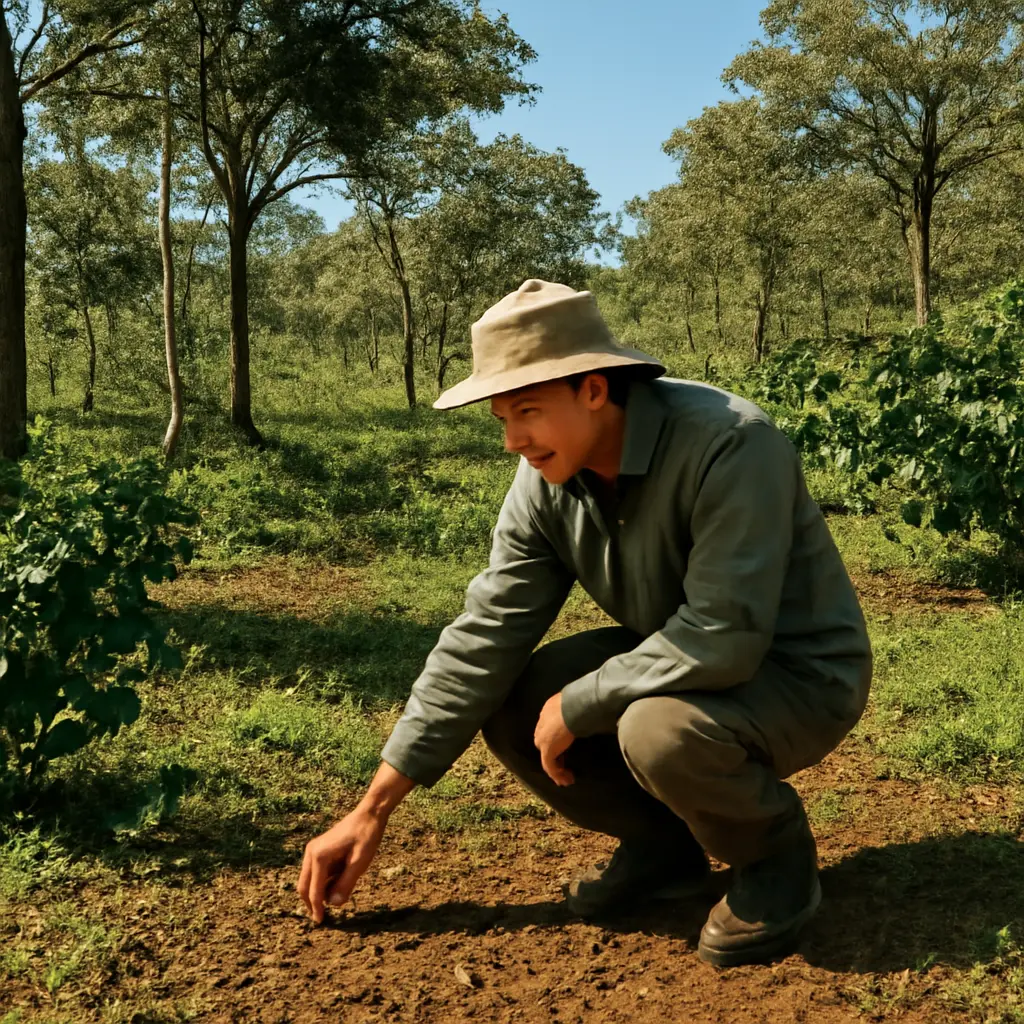
Regenerative agriculture is a way of farming that seeks to restore soil health, support biodiversity, and improve the resilience of agricultural landscapes. Coffee growers are increasingly applying practices such as keeping living roots in the soil, planting shade trees, diversifying crops, and returning organic matter to fields. These methods are not new: many have long been part of Indigenous and smallholder farming traditions. What is changing is the attention and investment they now receive from coffee companies, researchers, and climate programs. The stakes are substantial: the International Coffee Organization estimates that roughly 12.5 million smallholder households depend on coffee, while research finds that climate change could make a significant share of today’s coffee-growing land less suitable by mid-century.
What regenerative agriculture means for coffee farming
There is no single, universally accepted definition of regenerative agriculture. The Food and Agriculture Organization of the United Nations describes related sustainable soil-management approaches through practices that maintain or improve soil functions, while the U.S. Department of Agriculture’s Natural Resources Conservation Service emphasizes principles such as minimizing soil disturbance, maintaining living roots, maximizing soil cover, and increasing plant diversity. In coffee, the term generally describes a system of practices intended to improve ecological function on farms—not a single technique or a guaranteed certification.
The distinction matters. Coffee is a perennial crop, and its productivity depends on more than the coffee bushes themselves. Trees, ground cover, soil organisms, water, and neighboring habitat all shape farm conditions. A regenerative approach therefore considers the whole farm landscape, including how coffee is grown beneath shade, how nutrients are replenished, and whether farmers can maintain yields and livelihoods over time.
Soil health and living cover
Soil health refers to the capacity of soil to function as a living ecosystem that sustains plants, animals, and people. Coffee farms can support that function by retaining leaf litter, using cover crops, limiting unnecessary tillage, and applying compost or other organic amendments. These measures can reduce erosion and help soil retain water, though their results depend on local rainfall, soil type, farm management, and the amount and quality of organic material available.
The benefits are especially relevant on steep coffee-growing slopes, where bare soil can be vulnerable to heavy rain. The World Resources Institute has reported that agriculture is a major driver of soil erosion globally; on individual farms, ground cover and tree roots can help hold soil in place. Such practices do not eliminate erosion, but they can reduce exposure and improve the soil’s ability to absorb water.
Shade trees and biodiversity
Shade-grown coffee is cultivated beneath a canopy of trees, either in traditional mixed forests or in managed agroforestry systems. Shade trees can moderate temperature, provide habitat, contribute leaf litter, and sometimes yield fruit, timber, or other products. Smithsonian Migratory Bird Center research has documented the importance of structurally diverse shade coffee farms as habitat for birds and other wildlife.
Shade is not automatically beneficial in every setting. Too much shade may lower coffee production or increase humidity-related disease pressure, while poorly chosen tree species may compete with coffee for water and nutrients. Farmers therefore need locally appropriate combinations of tree species, canopy density, and pruning practices. The goal is not simply to maximize tree cover, but to balance ecological benefits with crop health and household income.
Why coffee farmers are turning to regenerative practices
The renewed interest reflects mounting pressure on coffee production. Coffee is sensitive to temperature and rainfall, and the two main commercial species—Arabica and Robusta—have different but significant climate constraints. A 2017 study in the journal Proceedings of the National Academy of Sciences projected that climate change could reduce the amount of land suitable for coffee by about 50 percent by 2050. That estimate is a global modeling result, not a prediction that half of current production will disappear; local outcomes will vary with elevation, adaptation, and future emissions.
Farmers also face volatile prices, rising input costs, aging coffee plants, and pressure from pests and diseases. Regenerative practices are being explored as ways to strengthen farm resilience and diversify income, but they are not quick fixes. Establishing trees or rebuilding soil can take years, and transition costs may fall on farmers before benefits become clear. Programs work best when they provide technical support, fair purchasing arrangements, and financing suited to smallholder realities.
Climate resilience through agroforestry
Agroforestry combines trees with crops or livestock on the same land. In coffee, a layered system can buffer heat and wind, diversify farm products, and create more varied habitat. A 2021 review in Agronomy for Sustainable Development found that shade and tree-based systems can contribute to climate adaptation, although outcomes depend on design and local conditions.
For example, coffee farmers in Central America have used shade trees and soil-conservation measures to manage hotter, less predictable conditions. In Ethiopia, coffee’s native forest origins have informed approaches that retain or restore forest cover while supporting coffee production. These examples illustrate a continuum—from traditional forest coffee to deliberately designed agroforestry—not one standardized model.
Diversified farms and livelihood security
Diversification means producing or selling more than coffee, such as fruit, timber, honey, or other crops. These products can spread risk when coffee yields or prices fall, and tree crops may provide food or income at different times of year. The International Coffee Organization has emphasized that millions of smallholder households rely on coffee, making household resilience a central concern rather than an optional environmental benefit.
Diversification requires careful planning. Farmers need markets, suitable planting material, and advice on how companion crops affect coffee. A fruit tree that adds income in one region may compete for water in another. Effective projects therefore measure both ecological outcomes and farmer-relevant results, including net income, labor demands, yield stability, and access to buyers.
How regenerative coffee is measured—and where claims fall short
Regenerative agriculture is a set of goals and practices, not a universally standardized label. Companies and certification programs may use different definitions, indicators, and verification systems. As a result, the word “regenerative” on a coffee product does not by itself establish that soil carbon increased, biodiversity improved, or farmers earned more.
Credible assessment combines practice records with measured outcomes. Depending on the farm and program, useful indicators can include soil organic carbon, ground cover, erosion, tree diversity, water quality, coffee yield, input use, and farmer income. Measurements should be repeated over time and compared with an appropriate baseline; a single snapshot cannot show whether a farm is improving.
Carbon claims and the limits of soil measurement
Soil carbon is the carbon stored in soil organic matter. Adding trees and organic residues may increase carbon storage, but results vary with soil, climate, depth, and management, and measurements are technically demanding. The Intergovernmental Panel on Climate Change notes that land-based carbon storage is affected by saturation, permanence, and the possibility that stored carbon may later be released.
For coffee buyers, this means carbon claims should specify what was measured, where, and over what period. Farms should not be promised automatic carbon credits simply for adopting a practice. Transparent accounting also needs to avoid double counting and distinguish estimated emissions reductions from verified changes in soil carbon.
Farmer participation and fair transition costs
A regenerative program is more credible when farmers help choose its practices and metrics. Farmers know local soils, labor constraints, and market conditions, while extension workers and researchers can help test options and track outcomes. Programs should also disclose who pays for seedlings, training, certification, and monitoring—and whether buyers offer premiums or long-term purchasing commitments.
This is especially important because environmental benefits may accrue broadly while costs are concentrated on individual farms. Support can include transition finance, shared equipment, technical assistance, and stable contracts. Without these safeguards, regenerative language risks becoming a marketing claim that asks farmers to absorb costs without a reliable return.
What coffee buyers and growers can do next
Growers can begin with practices suited to their own farms: keeping soil covered, protecting water sources, retaining useful shade, and testing diverse plantings on a manageable scale. Buyers can support the transition by funding technical assistance, paying reliably, and asking suppliers for evidence that includes farmer livelihoods as well as environmental indicators. Consumers can look beyond broad claims and seek transparent information about sourcing, verification, and the benefits reaching producers.
A useful way to visualize progress is a farm-level dashboard tracking soil cover, shade-tree diversity, erosion indicators, coffee yield, and household income across several seasons. These measures will not capture every benefit, but they can make trade-offs visible and help farmers adjust practices based on evidence rather than slogans.
Conclusion: Regenerative agriculture is a renewed conversation, not a new invention
Regenerative coffee farming brings together familiar practices—living soil cover, organic matter, shade, biodiversity, and diversified production—and applies them to today’s climate and market challenges. Research on coffee’s climate vulnerability helps explain why interest is growing, while the long history of traditional farming shows that many of these ideas precede the current label. The central test is whether practices improve ecological function and strengthen farmers’ livelihoods in specific places.
Farmers, researchers, governments, and coffee companies can move the conversation forward by funding locally led trials, measuring outcomes over time, and sharing costs fairly. For further learning, consult the Food and Agriculture Organization’s soil-management resources, the International Coffee Organization’s market and sustainability publications, and peer-reviewed research on coffee agroforestry. Regeneration should be judged by what changes on the farm—and who benefits—not by the label alone.
Sources: Food and Agriculture Organization of the United Nations, Voluntary Guidelines for Sustainable Soil Management, https://www.fao.org/3/bl813e/bl813e.pdf; U.S. Department of Agriculture, Natural Resources Conservation Service, Soil Health, https://www.nrcs.usda.gov/conservation-basics/natural-resource-concerns/soils/soil-health; International Coffee Organization, Coffee Development Report 2020: The Value of Coffee, https://www.icocoffee.org/documents/cy2020-21/Coffee-Development-Report-2020.pdf; Bunn, C. et al., “A bitter cup: climate change profile of global production of Arabica and Robusta coffee,” Proceedings of the National Academy of Sciences, 2017, https://doi.org/10.1073/pnas.1701762114; Tscharntke, T. et al., “Beyond organic farming: biodiversity conservation in coffee agroforestry landscapes,” Agronomy for Sustainable Development, 2021, https://link.springer.com/article/10.1007/s13593-021-00714-2; Smithsonian Migratory Bird Center, Bird Friendly Coffee, https://nationalzoo.si.edu/migratory-birds/bird-friendly-coffee; Intergovernmental Panel on Climate Change, Climate Change and Land, 2019, https://www.ipcc.ch/srccl/.