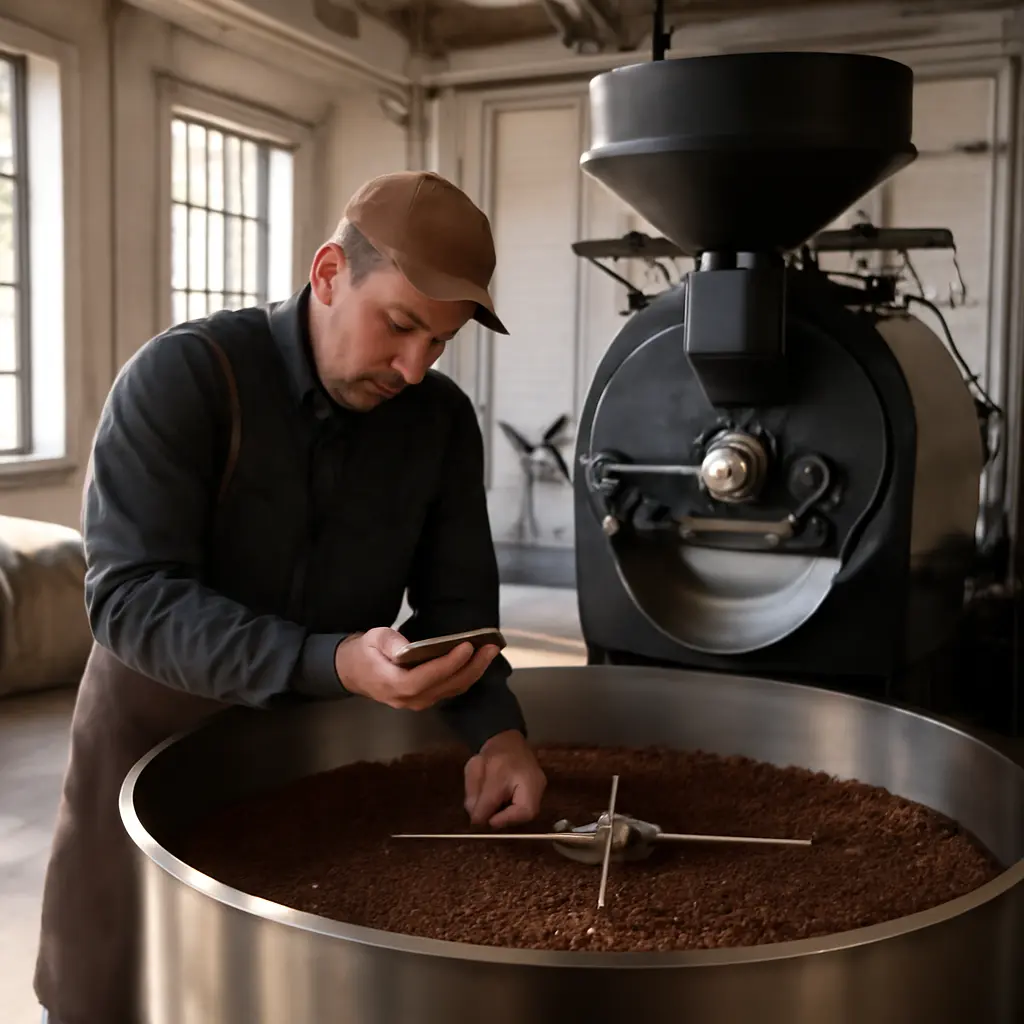
Robusta coffee is a coffee species—Coffea canephora—whose naturally high caffeine, resilient cultivation, and strong, soluble flavor make it especially well suited to instant coffee. It is not the only coffee used in instant products, but manufacturers value it for reliable supply, concentrated coffee character, and a lower-cost raw material than many Arabica coffees. Those advantages matter in a large market: the International Coffee Organization estimated world coffee consumption at about 177 million 60-kilogram bags in coffee year 2023/24. Understanding Robusta’s traits, how instant coffee is made, and where Arabica fits explains why Robusta so often anchors the jar.
Robusta’s suitability for instant coffee
“Robusta” is the widely used trade name for Coffea canephora, a distinct coffee species rather than a processing method or a quality grade. The International Coffee Organization describes Robusta as one of the two principal commercial coffee groups, alongside Arabica. Robusta plants generally tolerate heat and some pests better than Arabica, and their beans typically contain more caffeine. These characteristics make the crop commercially useful for products where consistent flavor, cost, and dependable volume are central considerations.
Robusta’s appeal to instant-coffee makers is a combination of agronomy and product performance. The International Trade Centre’s coffee market materials describe Robusta as generally less expensive than Arabica, although prices vary with harvests, quality, and market conditions. Its assertive, sometimes bitter or earthy taste can also remain noticeable after brewing, concentrating, and drying. That profile suits many mass-market instant coffees, while other products blend species to balance flavor and price.
Resilient cultivation and dependable supply
Robusta cultivation means growing Coffea canephora, a crop associated with warm, humid conditions and lower elevations than much Arabica production. Its relative tolerance of heat and several common coffee diseases can support production in environments where Arabica is more vulnerable. Tolerance does not mean immunity: drought, extreme heat, pests, and disease can still damage Robusta crops, and suitable growing conditions remain essential.
The U.S. Department of Agriculture’s Foreign Agricultural Service regularly reports substantial Robusta production in countries including Vietnam, Indonesia, Brazil, and Uganda. Vietnam, in particular, is a major source of Robusta beans used in global trade. A broad producer base helps manufacturers source the volume needed for a widely distributed product, although crop shortfalls and shipping disruptions can still affect availability and prices.
Caffeine and flavor that persist in a concentrated product
Caffeine content varies with cultivar, growing conditions, and measurement method, but Robusta beans generally contain more caffeine than Arabica beans. The National Coffee Association explains that coffee’s caffeine level depends on factors such as bean type and serving preparation. For instant coffee, the practical result is not a fixed caffeine advantage in every cup: serving size and the manufacturer’s blend matter. Robusta’s stronger, more bitter profile can nevertheless give a concentrated product a pronounced coffee taste.
The flavor is not universally preferred. Some drinkers seek the smoother, more aromatic character often associated with Arabica; others value Robusta’s intensity, especially in coffee with milk or sugar. Instant products vary widely, so the species alone cannot predict the taste of a finished cup.
Instant coffee production benefits from Robusta’s extractable solids
Instant coffee is brewed coffee from which much of the water has been removed, leaving a soluble product that can be reconstituted with hot water. The National Coffee Association describes two principal commercial drying methods: spray drying, which turns coffee extract into droplets dried by hot air, and freeze-drying, which freezes the extract and removes ice under vacuum. Both methods aim to make a stable, convenient product; the precise factory process and blend are company-specific.
Coffee beans contain water-soluble compounds that can be extracted during brewing. Robusta’s robust flavor and typically competitive cost make it a useful ingredient for this process, but it is inaccurate to say that Robusta alone makes coffee more soluble or automatically produces a higher extraction yield. Results depend on bean quality, roasting, grind, extraction settings, and the manufacturer’s process. The commercial advantage is the fit between an assertive coffee profile and a product designed for convenient, repeatable preparation.
From roasted beans to soluble coffee
Manufacturers roast and grind green coffee, extract soluble material with water, and concentrate the resulting liquid before drying it. Spray-dried instant coffee is produced by atomizing the extract into a stream of hot air; freeze-dried coffee is made by freezing concentrated extract and removing water through sublimation. The finished granules dissolve in water, sparing consumers the need to brew and filter grounds.
A coffee’s behavior in this chain is not determined by species alone. Roast level changes flavor and the compounds available in the extract, while extraction conditions influence strength and composition. Robusta can provide an economical, bold base, and manufacturers may use Arabica or other coffees to refine aroma and taste.
Blends balance cost, flavor, and consistency
A blend combines coffees from different species, origins, or lots to achieve a chosen flavor and price. In instant products, a Robusta-heavy blend can support a forceful coffee character and competitive production costs, while Arabica may contribute aromatic or smoother notes. There is no universal recipe: brands can change proportions, origins, and roast profiles according to their product positioning and supply conditions.
This flexibility is useful when harvests and commodity markets shift. The International Coffee Organization publishes monthly market data because global coffee prices respond to supply, demand, and production conditions. Blending gives manufacturers options, but it cannot eliminate exposure to crop risks or guarantee identical flavor from every batch.
Robusta’s advantages come with trade-offs
Robusta’s role in instant coffee reflects practical strengths, not a simple ranking in which one species is always better. Coffee quality is shaped by species, variety, farming, processing, roasting, storage, and preparation. Arabica can be used in instant coffee, and premium soluble products may emphasize its aroma; Robusta can also appear in espresso blends and other brewed coffees. The best choice depends on the intended drink and the manufacturer’s goals.
A bold profile is useful but not universal
Robusta is often described as stronger, more bitter, or earthier than Arabica, but those descriptors are broad tendencies rather than guarantees. Growing conditions and post-harvest processing can improve or diminish a lot’s flavor, and roasting changes the cup further. Instant coffee consumers who prefer a mild, aromatic cup may favor an Arabica-led product, while those who want a pronounced taste or typically lower-priced option may prefer a Robusta-forward one.
Climate resilience does not remove supply risk
Robusta’s relative heat tolerance can be valuable as coffee-growing regions face a changing climate, but it should not be mistaken for climate-proof production. Research reviewed by the Intergovernmental Panel on Climate Change identifies climate change as a growing risk to agricultural systems, including crops sensitive to temperature and rainfall. Robusta still needs appropriate water, soil, and growing conditions; prolonged drought, extreme temperatures, and pests can threaten yields and quality. Diversifying origins and improving farm resilience therefore matter even for products that rely heavily on Robusta.
Conclusion: Robusta fits instant coffee’s practical demands
Robusta dominates many instant-coffee blends because its cultivation can support large-scale supply, its cost often suits an accessible product, and its assertive flavor carries through extraction and drying. Instant coffee’s production process concentrates soluble coffee compounds, while blending lets manufacturers adjust taste, price, and consistency. Those advantages do not make every Robusta coffee superior, nor do they guarantee uniform flavor or supply.
For consumers, the useful next step is to compare labels and taste rather than assume that species alone determines quality. For a deeper understanding, consult coffee market reports from the International Coffee Organization and crop outlooks from the U.S. Department of Agriculture, then explore how different blends and drying methods affect the cup.
Sources: International Coffee Organization, Coffee Report and Outlook, December 2024, https://www.ico.org/documents/cy2024-25/Coffee_Report_and_Outlook_December_2024.pdf; International Coffee Organization, World Coffee Consumption, https://www.ico.org/; International Trade Centre, The Coffee Guide, https://www.intracen.org/resources/publications/the-coffee-guide-fourth-edition; U.S. Department of Agriculture, Foreign Agricultural Service, Coffee: World Markets and Trade, https://www.fas.usda.gov/data/coffee-world-markets-and-trade; National Coffee Association, How Is Instant Coffee Made?, https://www.ncausa.org/About-Coffee/How-is-Instant-Coffee-Made; National Coffee Association, Caffeine, https://www.ncausa.org/About-Coffee/Caffeine; Intergovernmental Panel on Climate Change, Climate Change 2022: Impacts, Adaptation and Vulnerability, https://www.ipcc.ch/report/ar6/wg2/