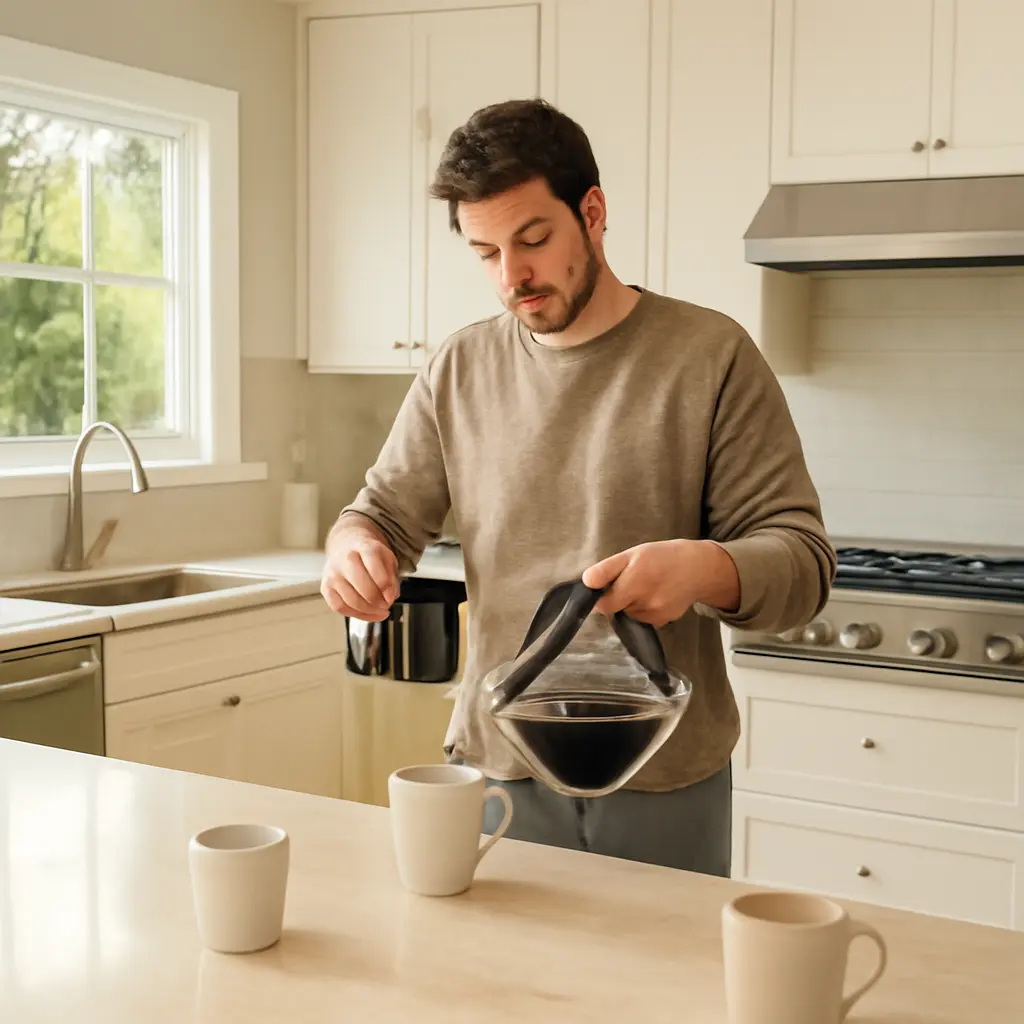
A first coffee maker is a device for brewing coffee at home, but choosing one well means matching its brew style, capacity, cost, and upkeep to your actual routine—not buying the machine with the most features. Beginners often overlook how much coffee they make, the importance of grind size and water, and the ongoing cost of filters or capsules. The Specialty Coffee Association’s brewing standards offer a useful quality benchmark, while the U.S. Environmental Protection Agency notes that tap-water quality varies by location. This guide compares drip, single-serve, pour-over, French press, and espresso machines, then explains how to assess convenience, flavor, maintenance, and budget.
Choosing a first coffee maker by brew method
A coffee maker’s brew method is the way it combines water and ground coffee to extract flavor. The Specialty Coffee Association (SCA) publishes technical standards for brewed coffee, including water temperature, contact time, and brew strength; these standards help show why machines that look similar can produce different results. For a beginner, the practical choice is usually between batch brewing, single-cup brewing, manual immersion or pour-over, and espresso.
Drip machines: best for predictable batches
A drip coffee maker heats water and distributes it over a bed of grounds, collecting the brewed coffee in a carafe. It is a strong first choice for households that drink several cups at once or want coffee ready with minimal attention. Check the machine’s actual batch capacity, whether it has a thermal or hot-plate carafe, and whether the basket accepts common paper filters. A “12-cup” capacity usually refers to small manufacturer-defined cups, not twelve large mugs, so compare the stated volume in ounces or milliliters with what you drink.
Single-serve machines: convenient, but calculate the cost
Single-serve brewers make one portion at a time, commonly using capsules, pods, or a reusable basket. They can reduce leftover coffee and simplify weekday mornings, but convenience may come with higher per-cup costs and packaging waste. Before buying, check capsule availability and price, whether the machine accepts refillable pods, and whether its serving sizes match your mug. A low sticker price can be misleading if the system locks you into costly or hard-to-find consumables.
Pour-over and French press: control in exchange for effort
Pour-over brewing sends hot water through grounds in a filter, while a French press steeps grounds in water before a mesh plunger separates them. Both are relatively simple ways to explore how coffee changes with grind, water temperature, and brewing time. They typically cost less than electric machines, but require more hands-on preparation and cleanup. French press coffee also retains more fine particles and oils than paper-filtered coffee, which gives it a fuller texture; people who prefer a cleaner cup may favor pour-over with a paper filter.
Espresso machines: choose them for espresso, not status
Espresso is a concentrated coffee made by forcing hot water through finely ground coffee under pressure. An espresso machine can be worthwhile if you specifically want espresso-based drinks and are willing to learn dosing, tamping, grind adjustment, and cleaning. The machine is only part of the setup: a capable grinder, fresh beans, and regular maintenance affect results too. Beginners who mostly want a large mug of ordinary coffee may find a drip brewer simpler and less expensive.
Matching coffee-maker capacity and convenience to your routine
Capacity describes how much coffee a brewer can make per cycle, while convenience includes the time and effort required to prepare, serve, and clean it. These attributes matter as much as flavor: a machine that makes excellent coffee but produces too little—or takes more effort than you will sustain—may not be a good first purchase.
Buy for the number of servings you actually drink
Estimate your usual daily servings and the number of people who drink coffee at the same time. A small single-cup brewer suits occasional drinkers, while a larger carafe is more practical for multiple morning servings. Avoid treating advertised “cups” as standard mug servings: manufacturers may use smaller cup measures. Also consider whether you want coffee immediately, several times a day, or prepared in advance; a thermal carafe can keep a batch warm without leaving it on a heated plate.
Separate useful features from feature clutter
Programmable start times, adjustable serving sizes, and a removable water reservoir can solve real daily problems. By contrast, multiple brew modes or app controls may add cost without improving the coffee you routinely make. Write down the two or three features that would change your morning, then compare machines against that list. A basic brewer with clear controls is often easier to use and troubleshoot than a feature-heavy model.
Evaluating coffee-maker cost, upkeep, and durability
The purchase price is only one part of a coffee maker’s cost. Filters, capsules, descaling products, replacement parts, electricity, and time spent cleaning all contribute to its practical cost over the years. Consumer Reports and other product-testing organizations commonly assess factors such as performance, ease of use, and reliability; those criteria are useful reminders to judge more than the initial price tag.
Compare total cost, not just the shelf price
Calculate recurring expenses using your real usage: estimate servings per week, multiply by the cost of the relevant coffee and consumables, and compare that figure across brew systems. Reusable filters can reduce repeat purchases, though they need rinsing and may affect the cup’s texture. Capsule systems can be convenient, but their ongoing expense depends on the brand, serving size, and whether compatible alternatives are available. This simple comparison can reveal when a cheaper machine becomes more expensive to operate.
Check cleaning and descaling requirements
Cleaning removes coffee oils and residue; descaling removes mineral deposits that can build up inside a machine. The U.S. Environmental Protection Agency explains that drinking-water characteristics vary by source and location, so mineral buildup can differ between homes. Follow the manufacturer’s cleaning schedule and use only recommended descaling methods. Before purchase, check whether the basket, carafe, reservoir, and other removable parts are easy to reach and wash. A machine that is difficult to clean is more likely to be neglected.
Look for practical evidence of reliability
Reliability is the ability of a machine to work consistently over time. Review the warranty, availability of replacement parts, customer-service options, and patterns in independent owner reviews. Treat isolated complaints cautiously, but take repeated reports of leaks, premature failure, or difficult repairs seriously. A simpler design may be preferable if it has the capacity and features you need without unnecessary components.
Understanding coffee quality: grind, water, and brewing control
Coffee quality depends on more than the appliance. Grind size, coffee freshness, water, dose, and contact time all influence extraction—the process by which water dissolves flavor compounds from grounds. The SCA’s brewing standards provide a technical reference for controlled brewing, but a beginner does not need laboratory equipment: choosing a method that suits the coffee and using consistent measurements are useful first steps.
Match grind size to the brewer
Grind size affects how quickly water extracts flavor. A grind that is too fine for a method can slow flow and produce a harsh or over-extracted cup; a grind that is too coarse can produce weak or under-extracted coffee. Drip machines generally use a medium grind, French presses a coarser grind, and espresso machines a fine grind. A burr grinder provides more consistent particle sizes than many blade grinders, but beginners can start with coffee ground for their chosen brewing method.
Treat water as an ingredient
Water makes up most of a brewed cup, so its taste and mineral content can affect the result. If tap water tastes strongly of chlorine or has an unpleasant flavor, filtered water may improve the cup. The EPA’s drinking-water guidance helps consumers understand local water quality, but a coffee maker’s needs are not necessarily identical to water-safety standards. Avoid assuming that bottled or heavily purified water is automatically best; use water that tastes clean and follow the machine maker’s recommendations.
Use repeatable coffee-to-water measurements
A consistent coffee-to-water ratio makes it easier to adjust a brew deliberately. Weighing coffee and water is more repeatable than relying on scoops and vague “cup” markings, because beans differ in size and density. Start with the brewer’s guidance or the SCA’s published brewing parameters, then change one variable at a time—such as dose or grind—until the flavor suits you. This turns a disappointing cup into useful feedback rather than a reason to replace the machine.
A beginner’s coffee-maker buying checklist
Before choosing a model, answer these questions in order. They narrow the field by use case before advertising, aesthetics, or extra features influence the decision.
- How many servings do you make at once, and how large are your mugs?
- Do you value batch convenience, single-cup speed, manual control, or espresso drinks?
- What are the ongoing costs for coffee, filters, capsules, and cleaning?
- Can you easily wash the parts and find replacement supplies?
- Does the machine’s size fit your counter and storage space?
- Which specific features will you use every week?
- Does the warranty and repair support justify the purchase price?
A useful comparison chart would list brew method, servings per cycle, initial price, recurring consumable costs, cleaning effort, and warranty. Filling it in for three candidate machines is often more informative than comparing long feature lists.
Conclusion: choose the coffee maker you will use consistently
Choosing a first coffee maker is mainly a matter of matching brew method and capacity to your routine, then checking convenience, total cost, maintenance, and reliability. Drip machines suit many-cup mornings; single-serve brewers prioritize quick individual portions; pour-over and French press offer manual control; espresso machines are best for people who genuinely want espresso drinks and the work that comes with them. Grind, water, and consistent measurements matter too, but beginners can learn those gradually. Decide how you drink coffee, compare the ongoing costs, and choose a brewer that is easy to maintain—then spend time learning its basic technique before upgrading.
Sources: Specialty Coffee Association, Coffee Standards, https://sca.coffee/research/coffee-standards; U.S. Environmental Protection Agency, Drinking Water, https://www.epa.gov/sdwa; U.S. Environmental Protection Agency, Private Drinking Water Wells, https://www.epa.gov/privatewells; Consumer Reports, Coffee Maker Buying Guide, https://www.consumerreports.org/appliances/coffee-makers/buying-guide/.